John Dodd and Nicolas Maire: the English and French Lines at the Same Moment
Two workshops, one generation apart from Tourte, and a clear divergence that auction catalogues and museum holdings have quietly been documenting ever since.
The rail above the bench: everything the maker reaches for without looking away from the work.
Photo: cottonbro studio / Pexels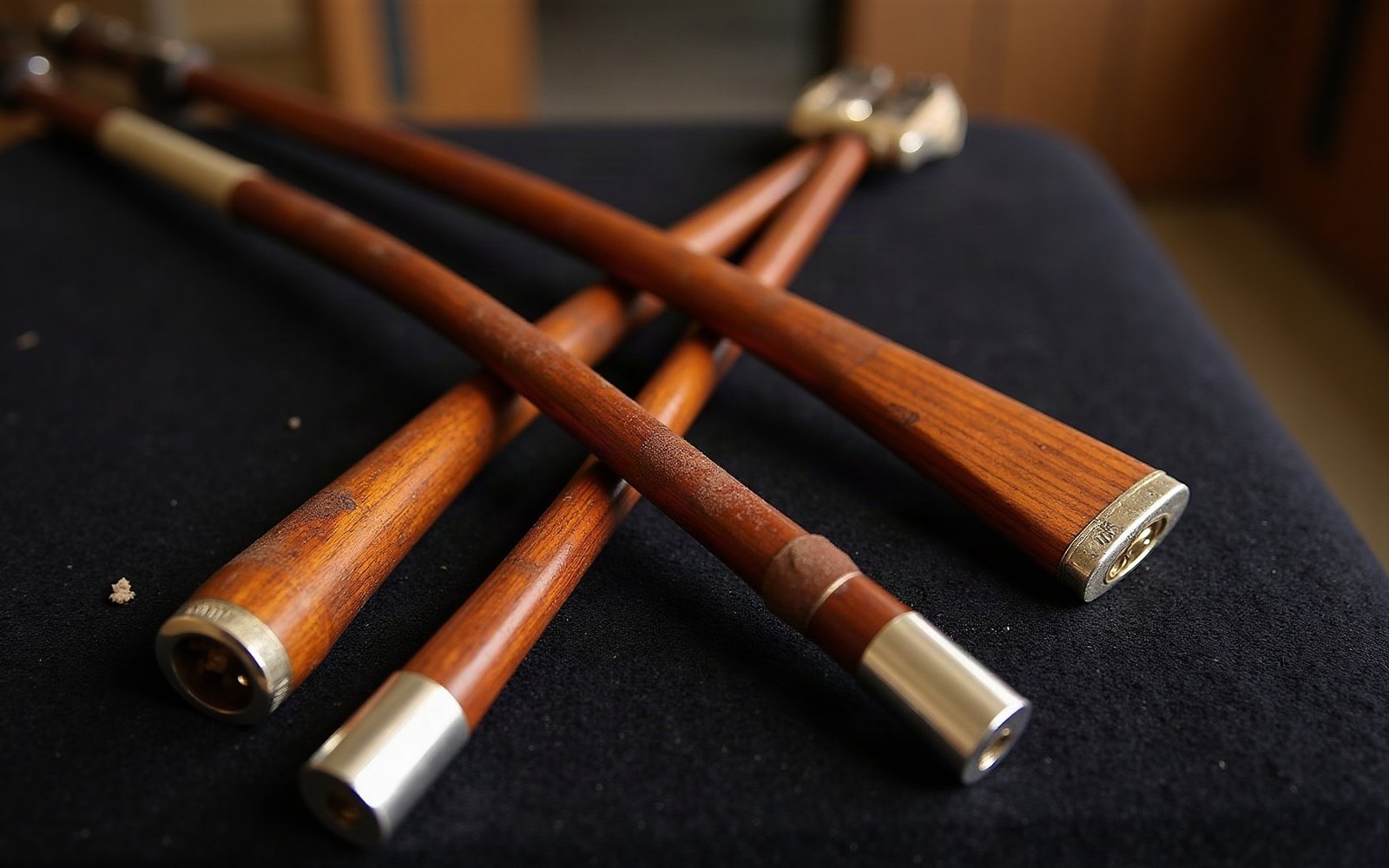
London and Mirecourt in the same decade. Attribution here rests on heads, frogs and the auction record.
Two Workshops, One Moment
François Xavier Tourte settled his proportions for the modern violin bow around 1785 and, in doing so, cast a long shadow over every maker who came after him. That shadow, however, did not fall evenly. Two workshops operating in roughly the same decades — John Dodd in London and Nicolas Maire in Mirecourt — reached independent conclusions about how a pernambuco bow stick should be made, and the contrast between them is sharper than the historical record usually acknowledges.
Dodd, working in the second half of the eighteenth century and into the early nineteenth, is the central figure in the English line. He adopted pernambuco — Paubrasilia echinata, the dense Atlantic Forest hardwood that Tourte had identified as uniquely suited to bow-making — with evident conviction, and his sticks show a characteristically strong taper from frog to head. The camber he applied, the slight inward curve that places the stick under tension against the ribbon of horsehair, is often described by collectors as more pronounced than in French work of the same period, giving surviving Dodd bows a playing feel that is noticeably stiffer. Auction attributions at Tarisio have confirmed Dodd's documented output across a wide range of surviving instruments, with condition and attribution driving significant spread in realised prices.
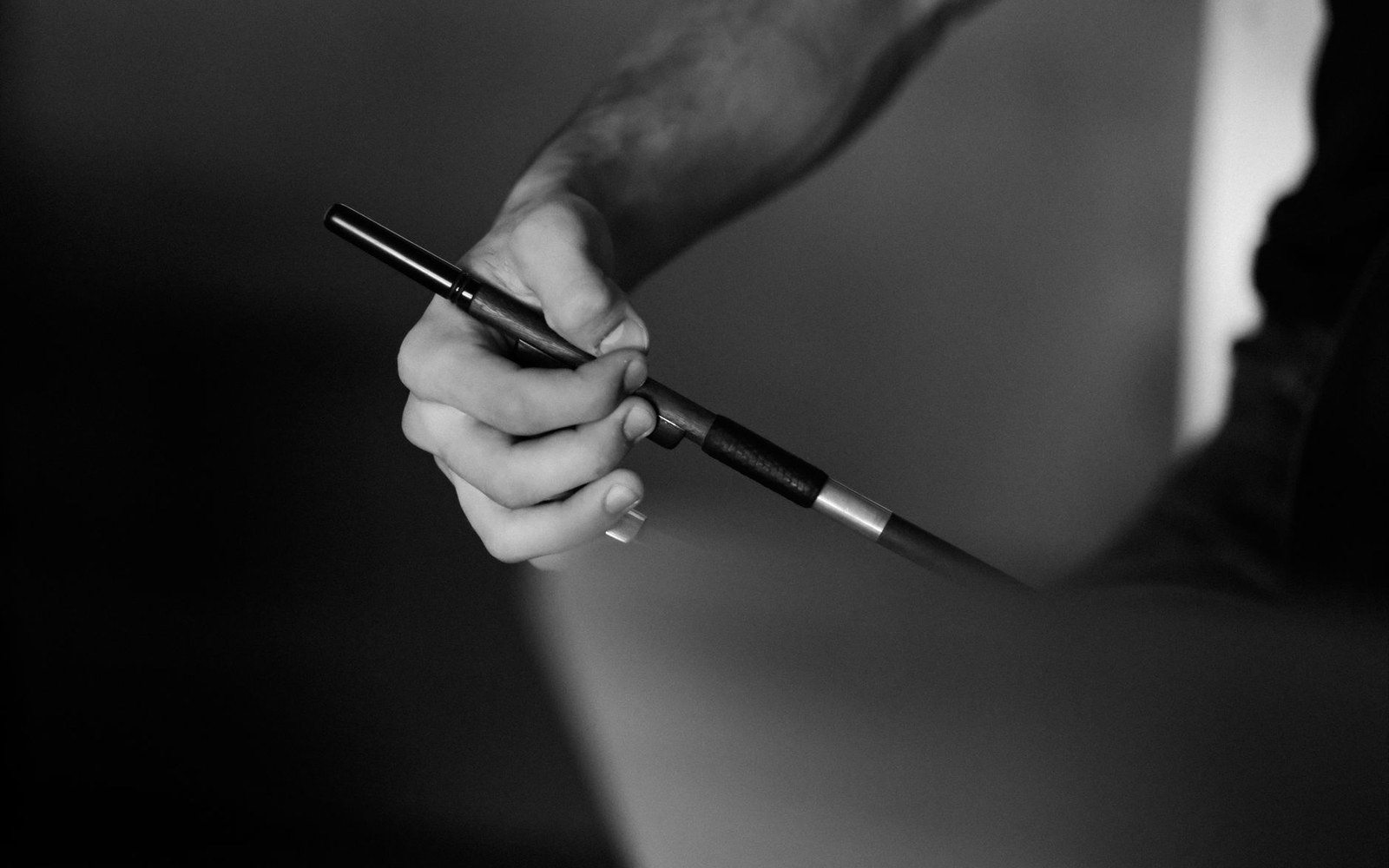
The broad head and muscular taper a school formed around, held inside Tourte's length and weight.
Photo: Alina Chernii / PexelsMaire represents a different inheritance. Based in Mirecourt, the small Lorraine town that served as the production centre of the French trade, he belongs to the generation that bridged Tourte's formal consolidation and the full flowering of the Paris school in Dominique Peccatte and those who followed. His sticks tend toward a rounder cross-section and a more graduated, even taper — closer in geometry to the Tourte model, though executed without Tourte's exceptional material selectivity. The Mirecourt context shaped him: workshop practices there emphasised throughput and formal consistency, and Maire's surviving bows reflect an environment where technique was transmitted laterally, between neighbouring craftsmen, rather than passed vertically from a single master.
What the Evidence Shows
The evidence base for comparing these two traditions is necessarily indirect. Neither Dodd nor Maire left written accounts of their methods, and documentation of the period is fragmentary. What exists is material: the bows themselves, assessed through collection attributions and auction catalogue entries. The Cité de la Musique in Paris and the Ashmolean Museum in Oxford both hold early bows that allow physical comparison across the Channel, and the differences in head geometry alone — Dodd tending toward a broader, flatter head chamfer; Maire closer to the angled French profile that Peccatte would later sharpen — are visible to any specialist handler.
The material they shared was, of course, pernambuco. In the late eighteenth and early nineteenth centuries, Brazilian timber reached European makers through the same dye-trade supply chains that had made pau-brasil commercially significant since the colonial period. The IUCN Red List assessment of Paubrasilia echinata — now listed as Endangered — makes plain how different the availability picture was then: the Atlantic Forest had lost relatively little of its extent compared with what the following two centuries would bring, and high-quality blanks moved with few regulatory constraints.
What Dodd and Maire jointly demonstrate is that Tourte's achievement, though singular, did not immediately produce a single response. The English line retained a stiffness and geometry that suited the playing conventions of London concert life; the Mirecourt French line stayed closer to the emerging French formal standard. Both workshops produced bows that remain playable and collectible today. The divergence between them is not a story of success and failure but of two craft cultures reaching the same new material and finding, through it, characteristically different things.
- c. 1747–1835François Xavier Tourte's life span, contextualising the generation Dodd and Maire belong to
- c. 1785Tourte settles the proportions of the modern violin bow
- Late 18th–early 19th centuryactive period of both Dodd and Maire
- 2016Paubrasilia echinata formally reclassified from Caesalpinia echinata
- 2022CITES keeps pernambuco in Appendix II but revises its annotation; export controls remain tight