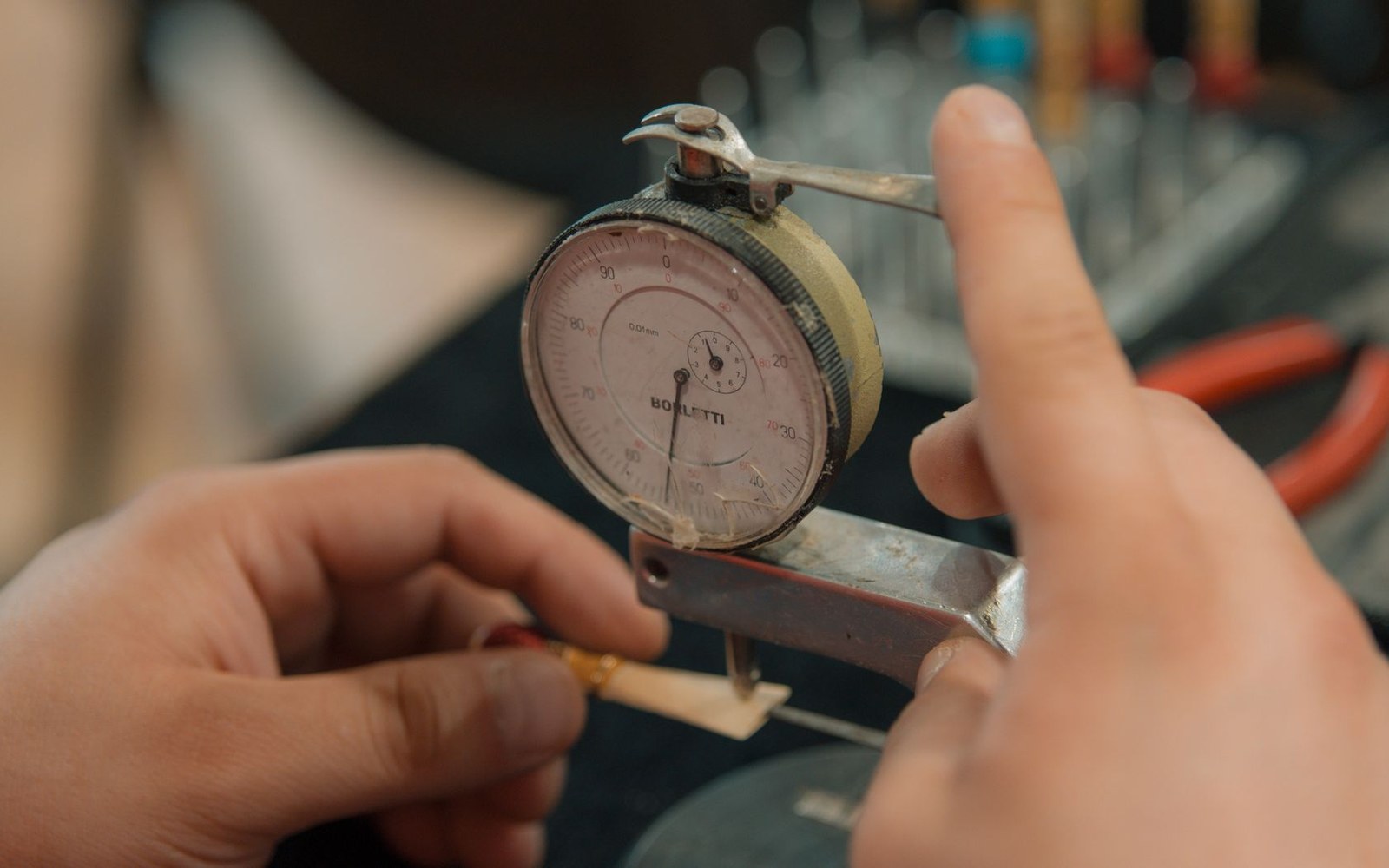
Thumb planes, calipers, gauge. Almost all of bow making is removing material that cannot be put back.
Photo: Sandin Redzo / PexelsMakers: Named hands, and the evidence that lets a bow be attributed to one of them.
The named bow makers — from Tourte and Dodd through Peccatte, Voirin and Sartory to the modern ateliers — and the competition record that documents them.
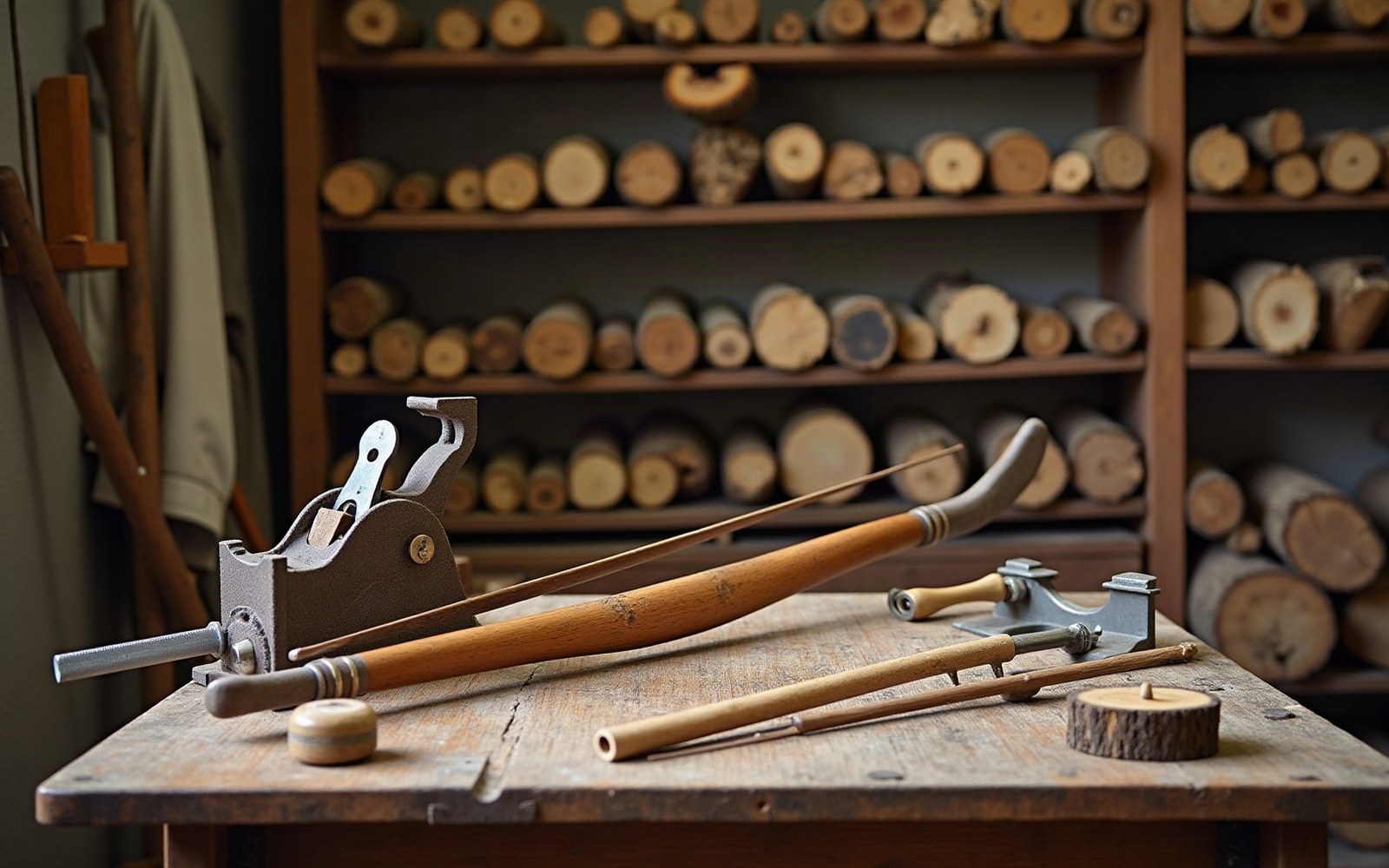 Start here
Tourte's Proportions, and Why They Stopped Moving in 1785
A watchmaker's son who worked by trial: lengths, weights and woods tested by players who could say what responded.
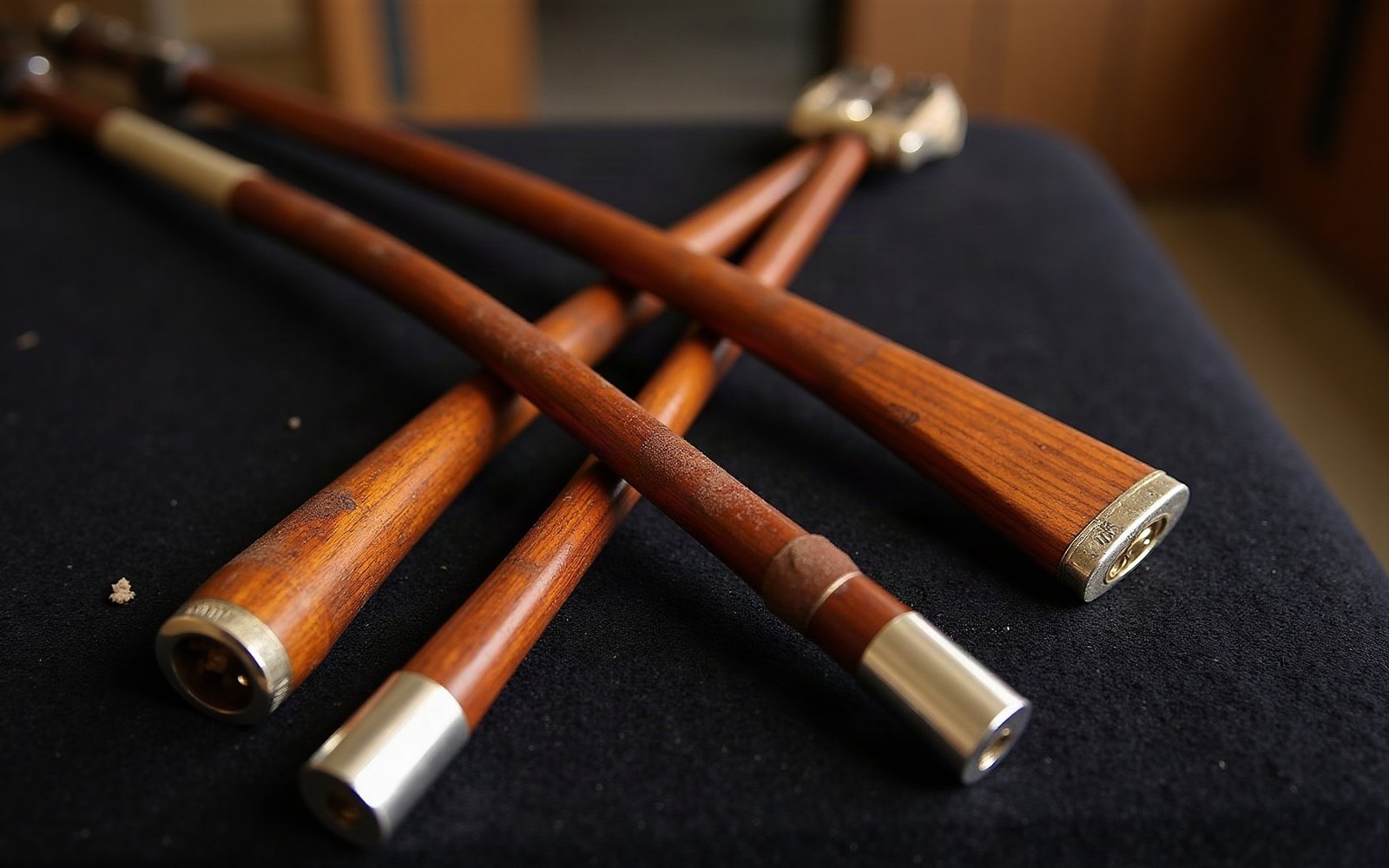
John Dodd and Nicolas Maire: the English and French Lines at the Same Moment
London and Mirecourt in the same decade. Attribution here rests on heads, frogs and the auction record.
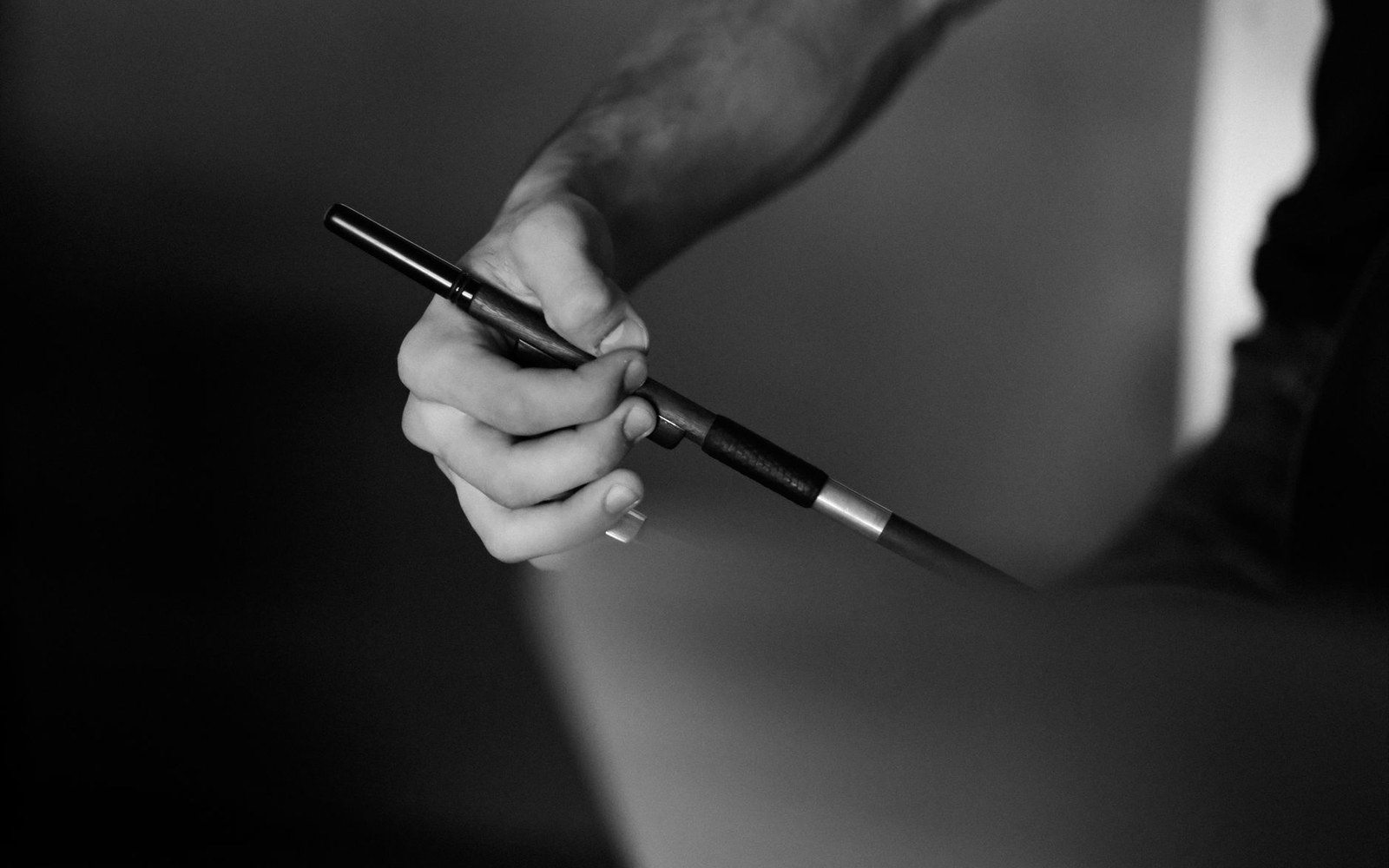
Dominique Peccatte and the School That Carried His Name
The broad head and muscular taper a school formed around, held inside Tourte's length and weight.
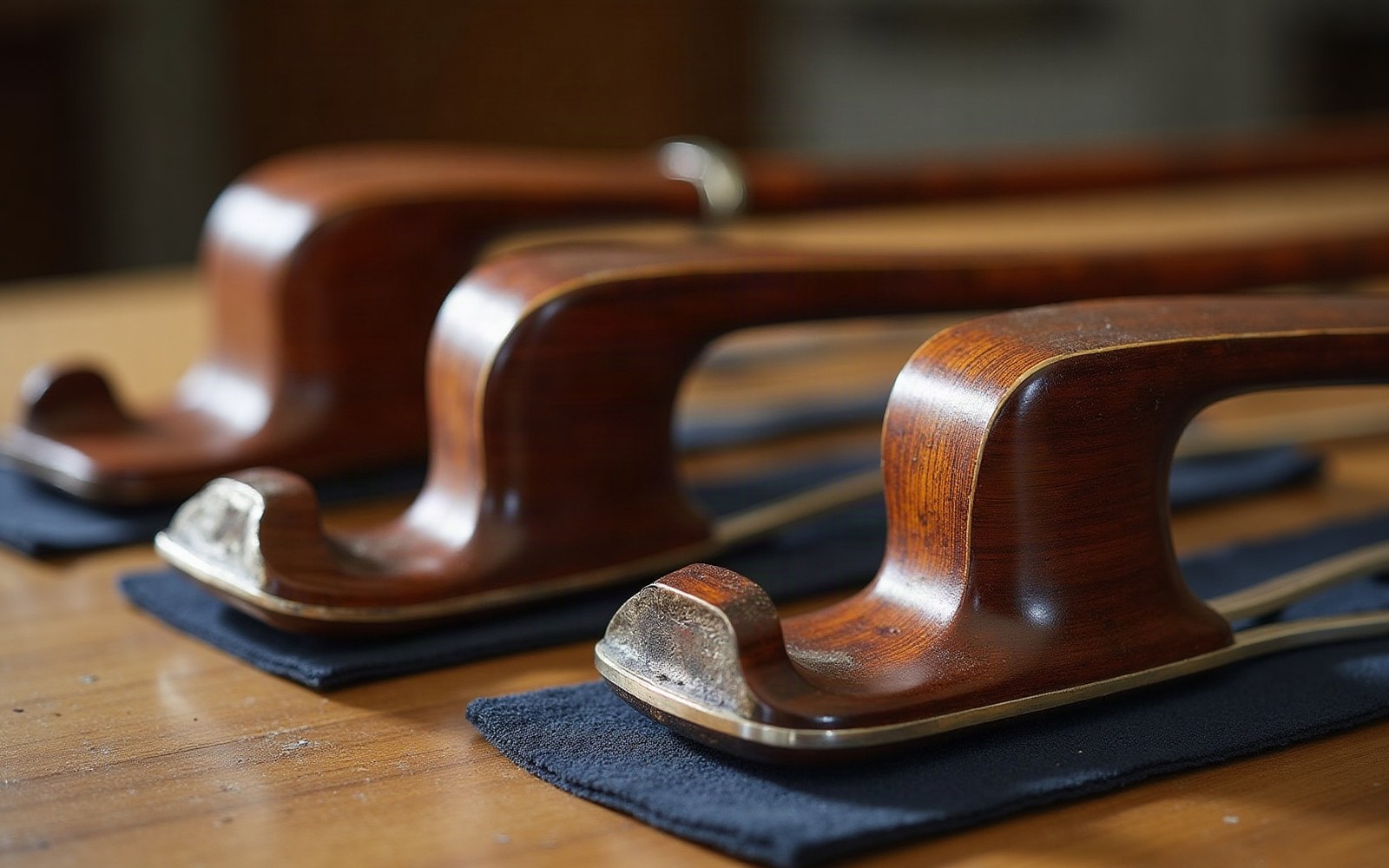
Voirin to Sartory: What Shifted at the End of the Nineteenth Century
Voirin's slender line, then Sartory's. Both shifts show in the head and the frog, not the dimensions.
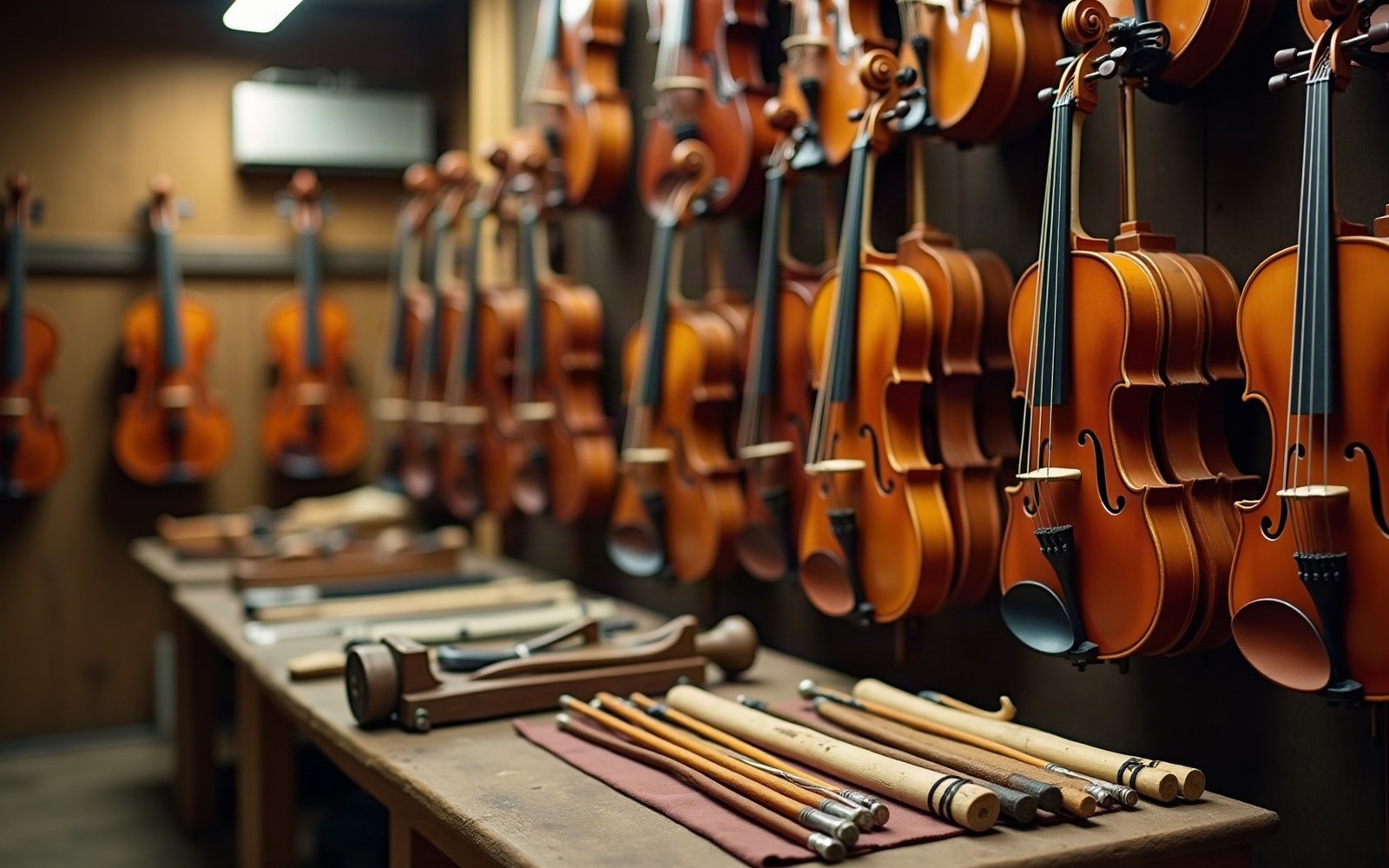
W. E. Hill & Sons and Hermann Richard Pfretzschner: the Workshop at Scale
A workshop bow carries a house stamp rather than a hand. Hill and Pfretzschner both worked at scale.

The Makers Who Stayed Near the Wood
The tradition that grew up beside the supply, and that the European record has consistently underweighted.
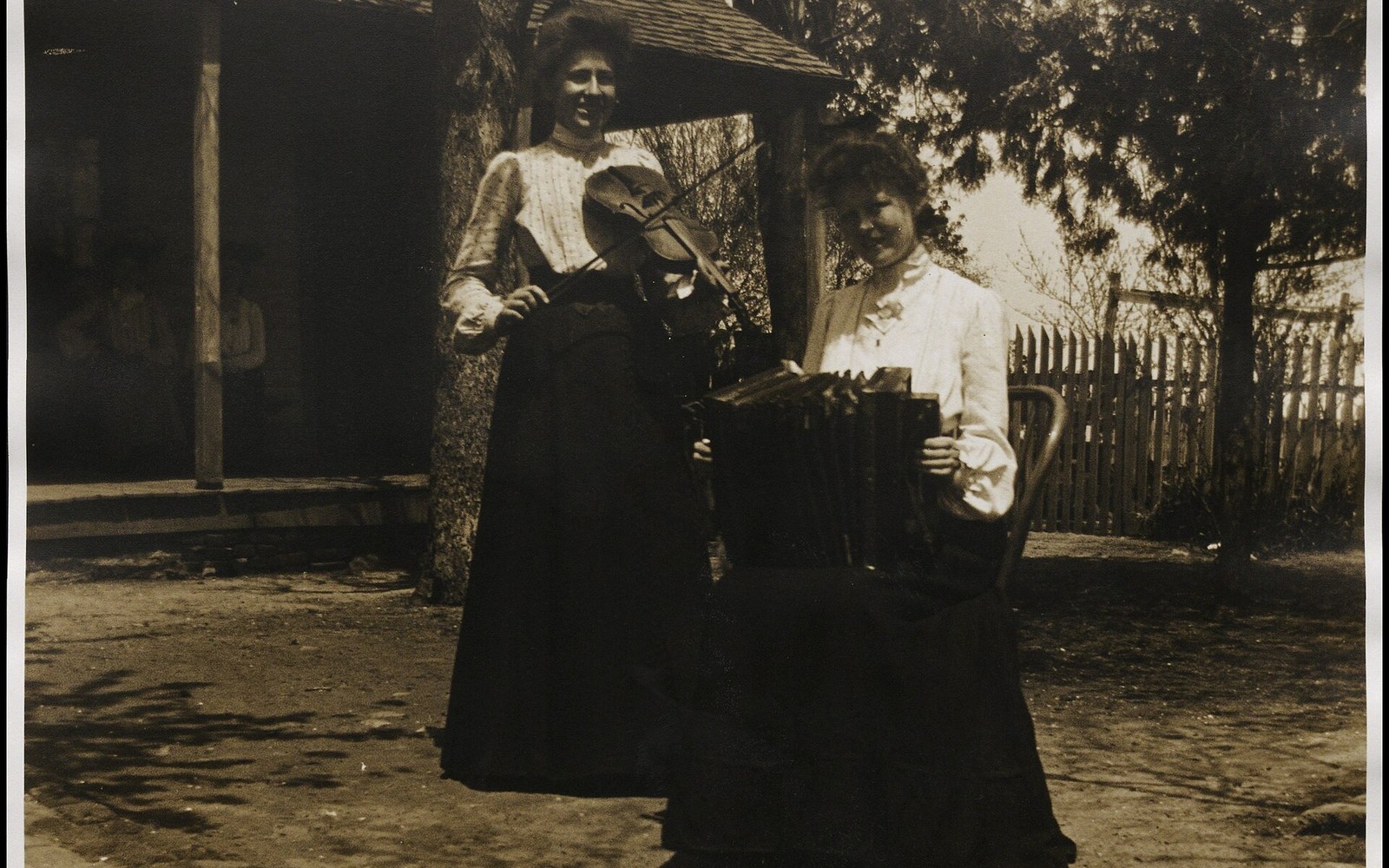
What the Violin Society of America Competitions Have Documented
The Violin Society of America results are a dated record of adjudicated work, not a ranking of makers.