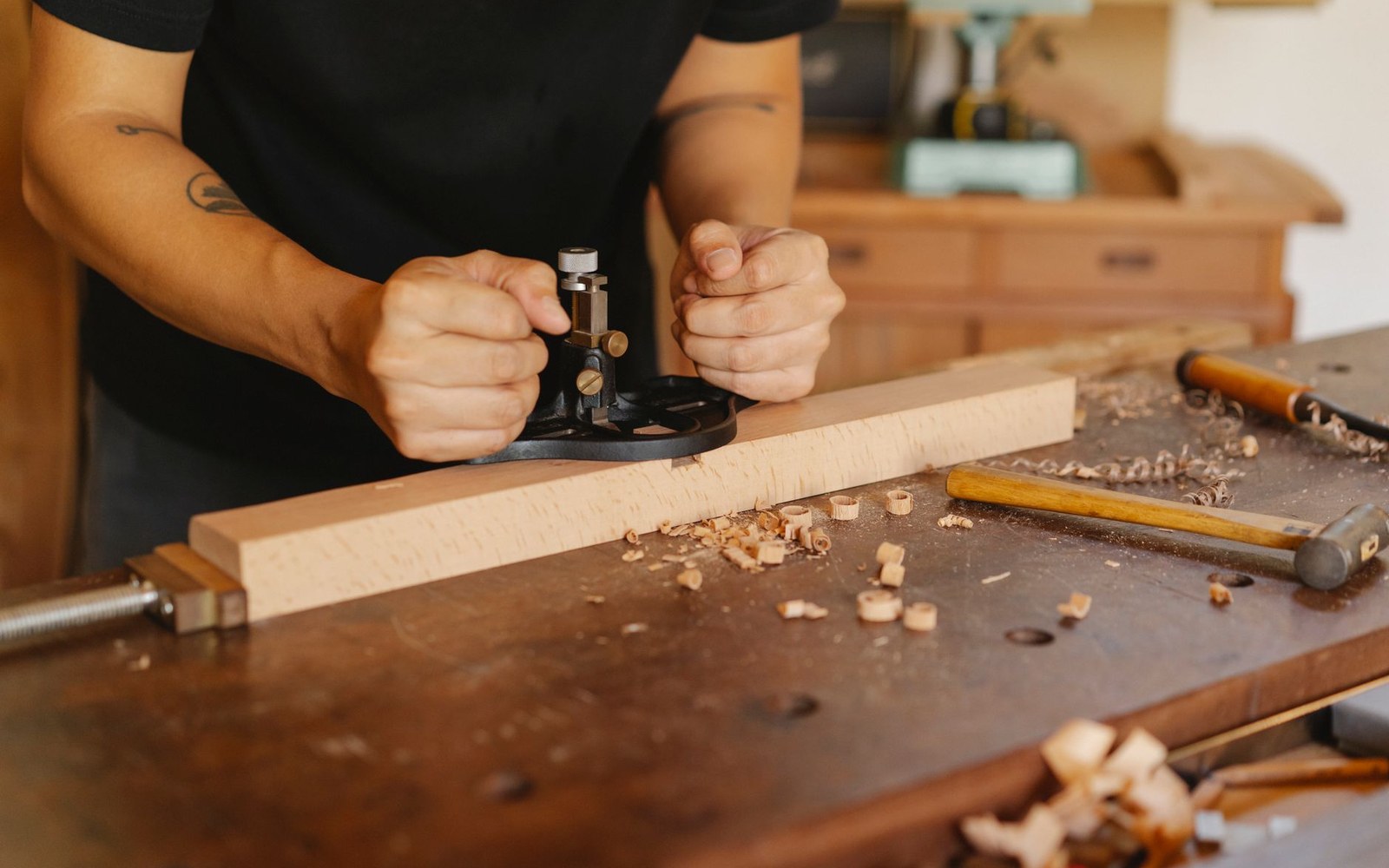
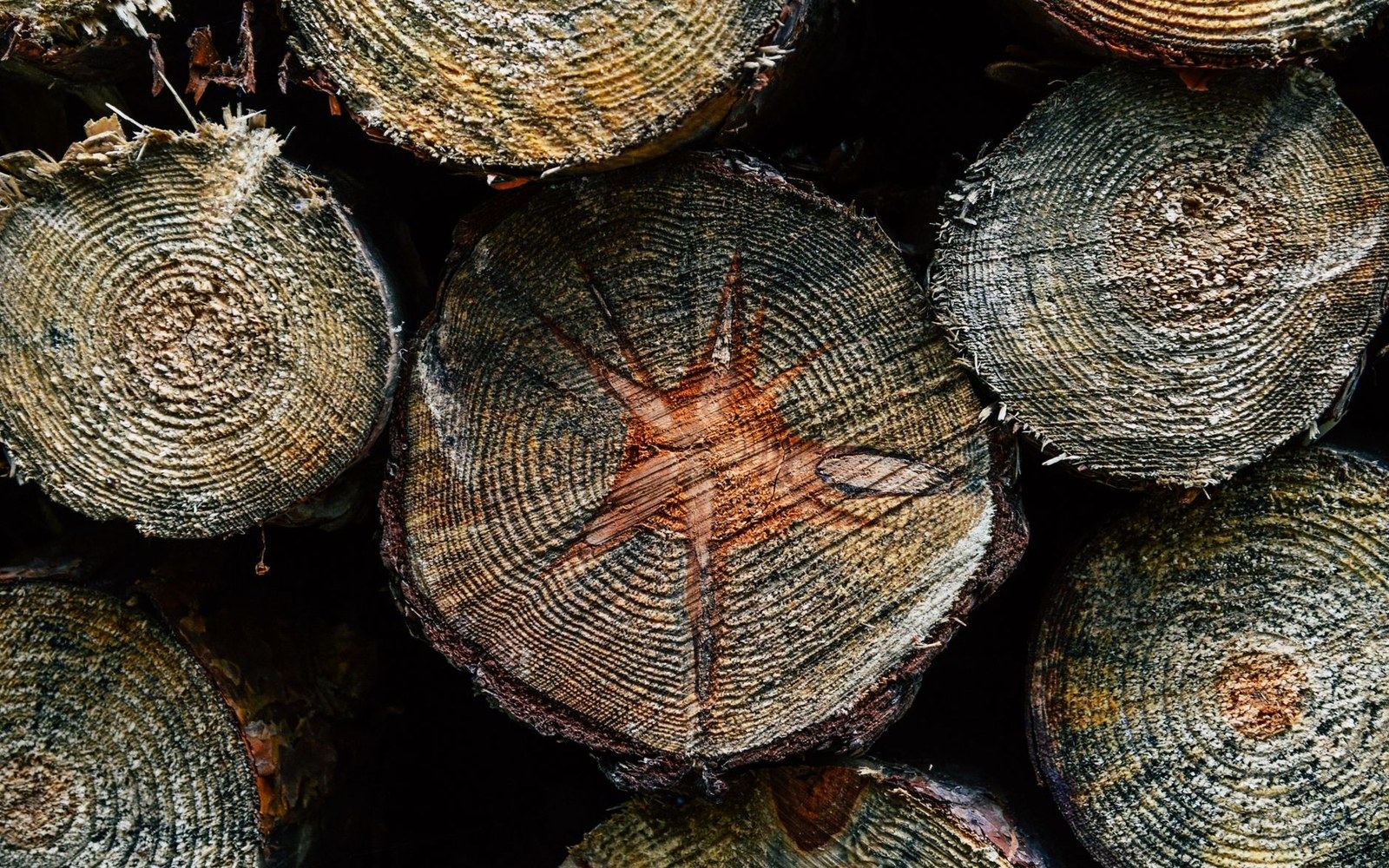
A billet is planed down by hand before a single facet is cut. What the maker is reading is grain direction, not thickness.
Photo: Ono Kosuki / PexelsThe Bow: Nine parts, one of which cannot be put back once it is removed.
The geometry, components and evolution of the modern pernambuco bow from pre-Tourte transitional forms to Tourte's settled proportions.
 Start here
Seventy-Five Centimetres, Sixty Grams, and Nobody Has Improved On It
74 to 75 centimetres from button to tip, 58 to 64 grams. The figures came out of one Paris workshop and were never revised.
Before the Camber: the Pre-Tourte Bow and the Transitional Stick
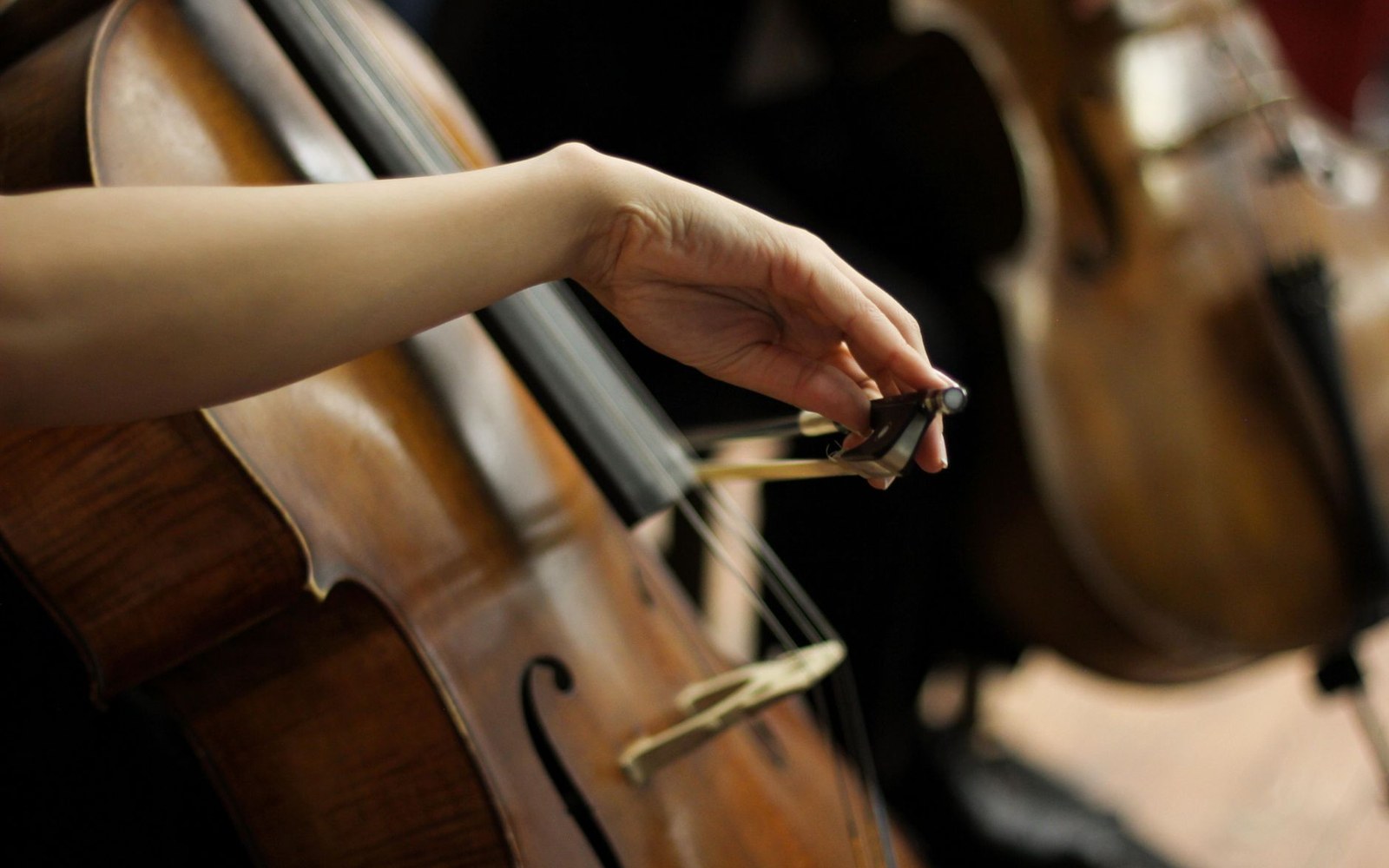
The pre-Tourte stick curves away from the hair rather than towards it — the opposite of the modern camber.
The Frog, the Ferrule and the Eyelet
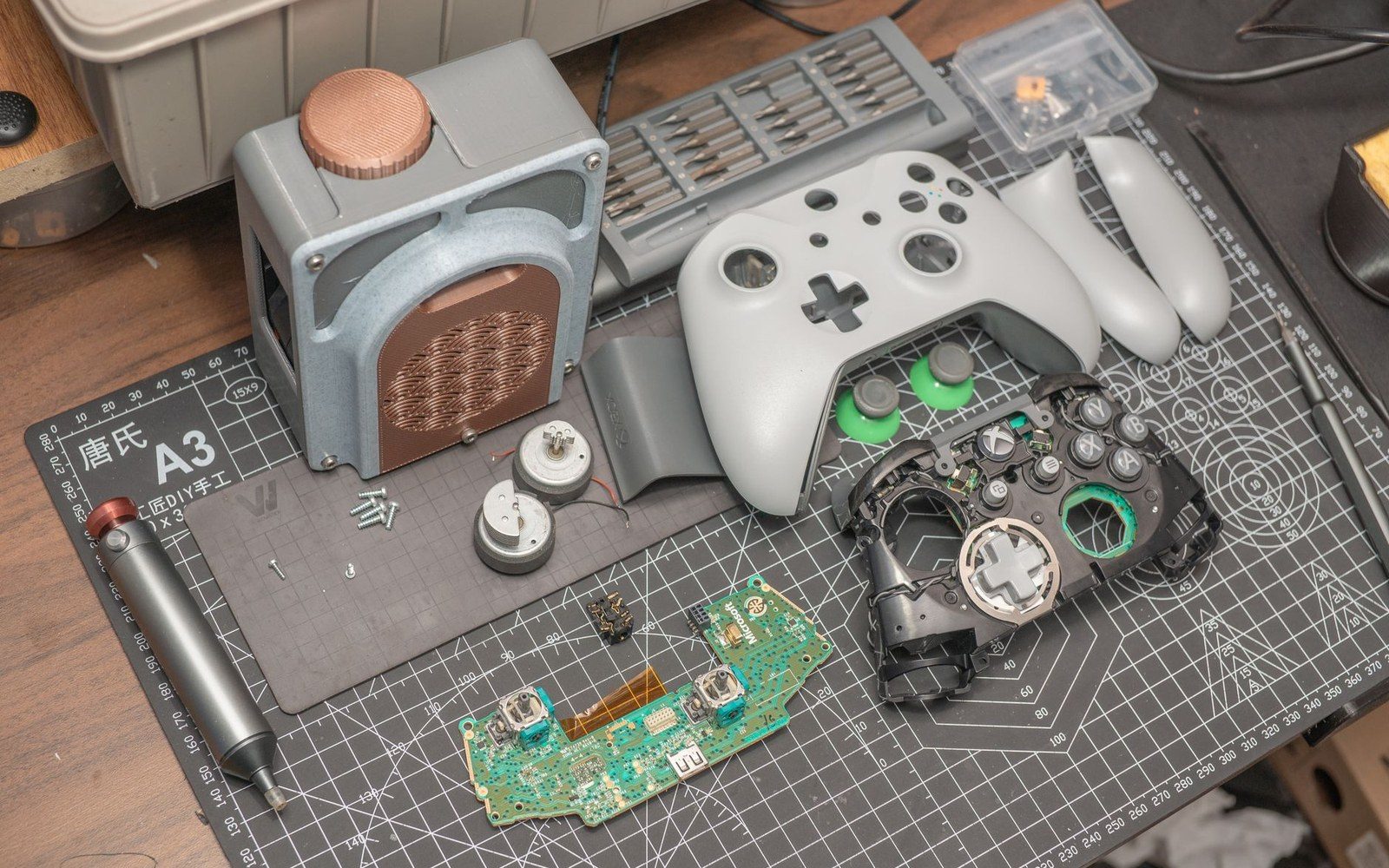
The ferrule spreads the hair into an even ribbon; without it the hank bunches at the frog.
Horsehair, Rosin, and the Friction the Whole Thing Depends On
Hair is a consumable and the stick is not. The cuticle scales that hold rosin wear flat with use.
Octagonal or Round, and What the Difference Is Worth
Eight planed faces raise lateral stiffness — by less than two billets of the same wood differ from each other.
What Changes When the Instrument Gets Larger
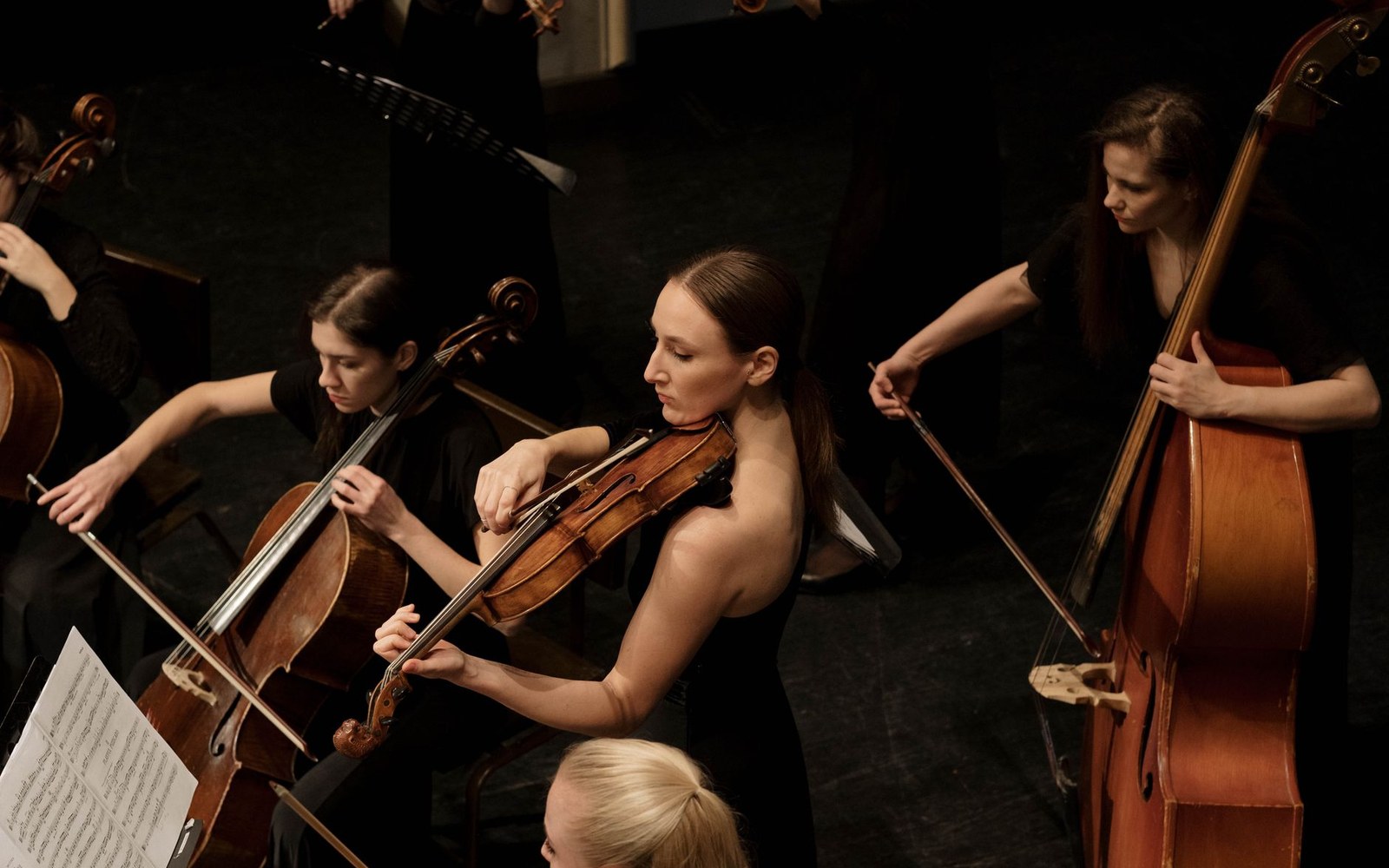
Shorter, heavier, and held two ways: the bass bow is the only one played both overhand and underhand.