What Is Left of the Forest the Wood Came Out Of
The Mata Atlântica once ran for nearly three thousand kilometres along Brazil's Atlantic coast.'s Atlantic coast. What remains is a lesson in what happens when the accounting runs in one direction only.
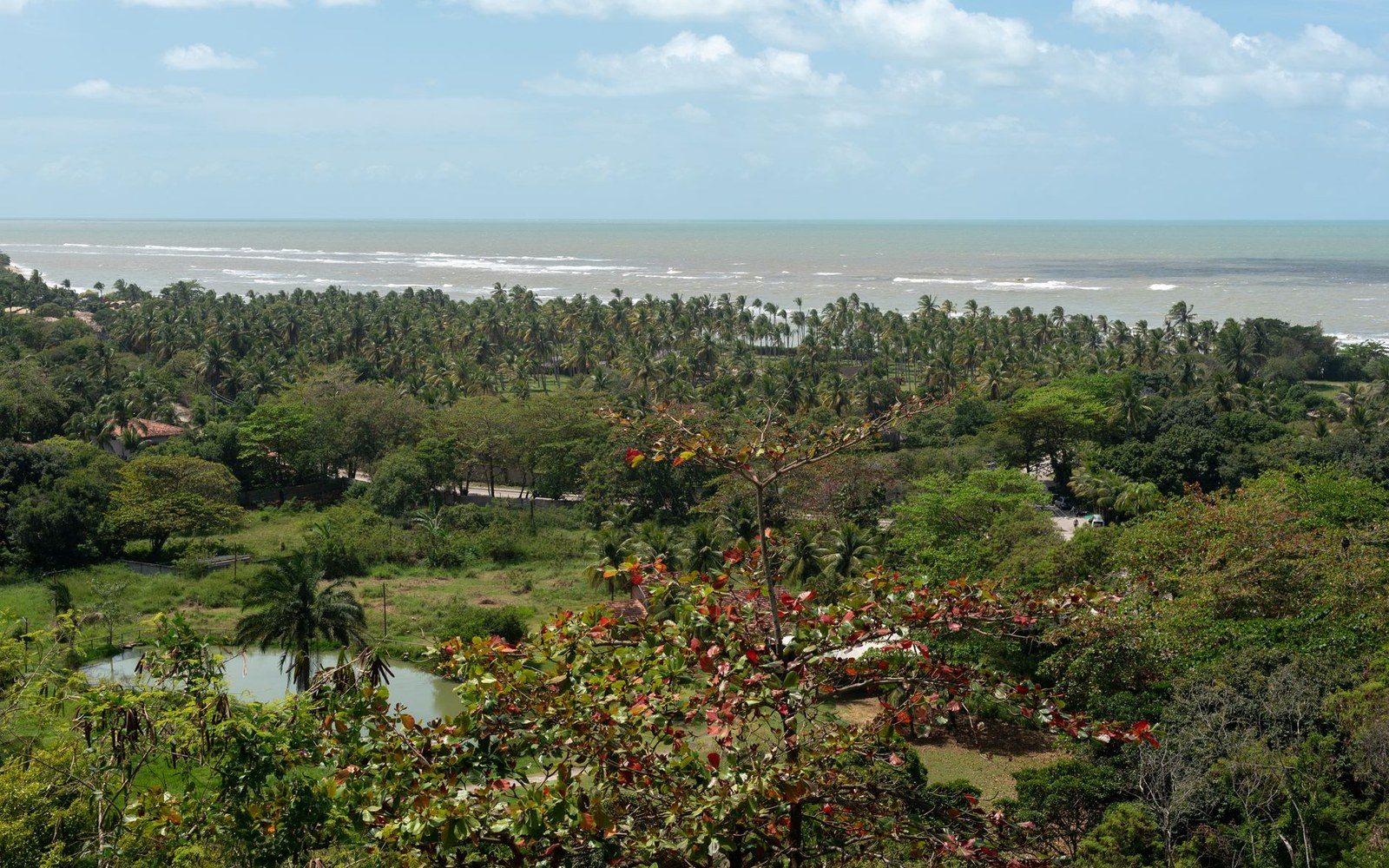
Coastal Bahia. Paubrasilia echinata is endemic to this forest and grows wild nowhere else.
Photo: Malcoln Oliveira / Pexels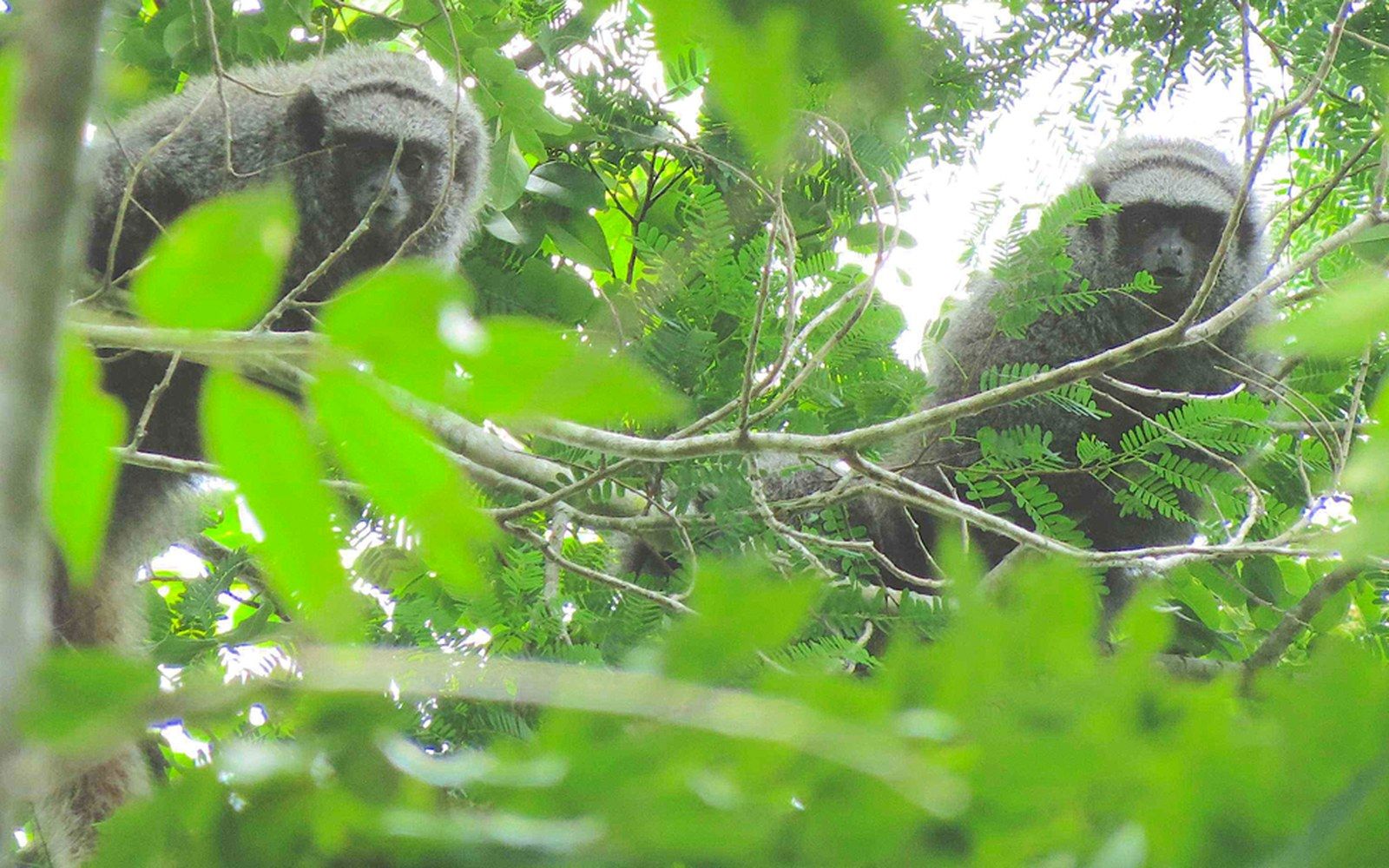
The forest survives as fragments in farmed land. The coastal belt held most of the pernambuco.
Photo: Casal de Guigós Bahia 2021 · Wikimedia CommonsA Forest Counted Out
The Atlantic Forest — Mata Atlântica in Portuguese — originally covered somewhere between 1.1 and 1.5 million square kilometres, stretching from the state of Rio Grande do Norte in the northeast down through Bahia, Espírito Santo and Rio de Janeiro to the subtropical south. Within that immense coastal corridor, the northern and central stretches — principally the states of Bahia and Pernambuco — held the densest concentrations of Paubrasilia echinata, the tree whose heartwood would eventually define the modern violin bow. The forest was not a single biome but a layered mosaic of lowland, montane and restinga (coastal scrubland) formations, each with its own hydrology and canopy structure. Pernambuco preferred the well-drained, seasonally dry slopes of the northeastern interior edge, where it could reach fifteen or more metres and develop the dense, resinous heartwood that made it exceptional.
That heartwood was what the colonial dye trade came for first. From the early sixteenth century, pau-brasil — the red-dye wood — was extracted under Portuguese monopoly in quantities large enough to name a country. By the time the bow trade found the same wood in the eighteenth century, centuries of felling and coastal clearance had already taken a significant portion of the original stand. The bow makers of Mirecourt and Paris worked with a resource that was already a fraction of what it had been, though the scale of what remained still made the trade seem inexhaustible.
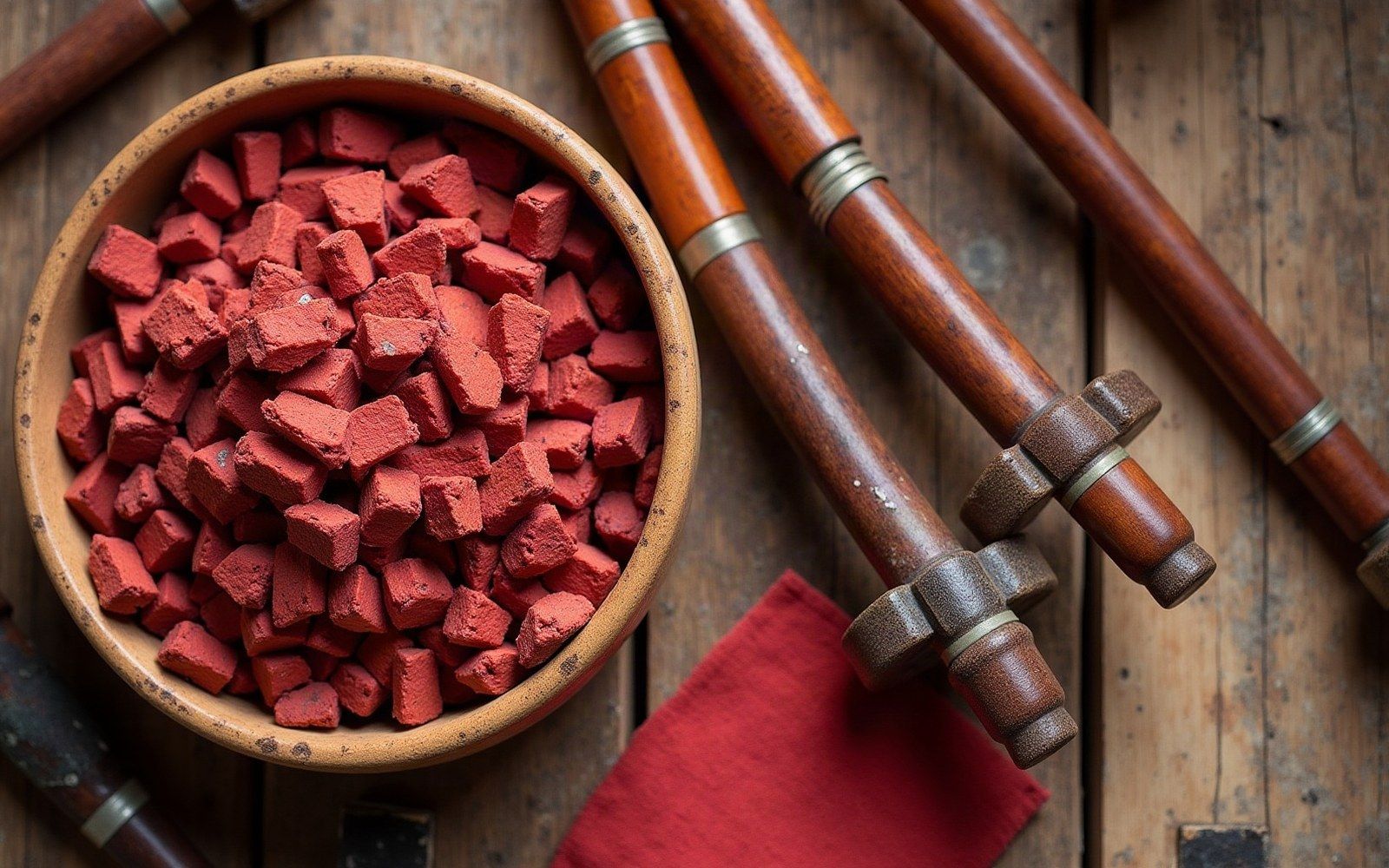
Dyewood chips and the red they yield. The dye trade ran for 250 years before the bow trade began.
It was not. According to the IUCN Red List assessment, Paubrasilia echinata is currently classified as Endangered, with population decline attributed to historical over-exploitation and ongoing habitat loss. The broader Mata Atlântica enclosing those populations tells a starker story. Conservation analyses estimate that less than twelve percent of the original Atlantic Forest cover survives today, and that surviving remnant is heavily fragmented — distributed across thousands of patches, most smaller than one hundred hectares, often isolated from one another by agricultural land, pasture and urban expansion. The state of Pernambuco, which gave the wood its commercial name, now retains some of the most severely reduced forest cover of any region within the original range.
The Account That Was Never Kept
The mechanism of loss is well documented even where the precise figures vary. Sugarcane agriculture consumed the northeastern lowlands from the colonial period onward. Coffee and cattle pushed into the interior through the nineteenth century, overlapping almost exactly with the decades when demand for pernambuco bow blanks in Europe was at its peak. Urbanisation along the coast — Brazil now has some of the largest metropolitan areas in South America, most of them built on former Atlantic Forest — consolidated what agriculture began. Each pressure operated largely without accounting for what was removed, and the cumulative result is that the Atlantic Forest is consistently ranked among the world's most threatened biodiversity hotspots, supporting an exceptional concentration of endemic species across an area now reduced to scattered fragments.
For Paubrasilia echinata specifically, the picture within what remains is uneven. The species is present in protected reserves in Bahia, Espírito Santo, Rio de Janeiro and Pernambuco, including in the Mata do Estado and other managed fragments, and documented replanting programmes — some coordinated by the International Pernambuco Conservation Initiative — have established seedling populations outside the wild. Whether those planted stands will mature into the calibre of timber the trade once used is a question that will not be answered for decades; pernambuco grows slowly, and the modulus of elasticity and internal damping coefficient that make old-growth heartwood exceptional may depend on conditions — soil chemistry, canopy competition, seasonal stress — that a managed plantation can only approximate.
What is left of the forest, then, is both a geographical fact and an open question. The geographical fact is less than twelve percent, heavily fragmented, concentrated in protected islands within a transformed landscape. The open question is whether the fragments are large enough, connected enough and stable enough to allow a slow-growing, once-abundant tree to recover at any scale meaningful to either ecology or craft. The record so far suggests that recovery, where it occurs, will be slower than the loss was — and the loss was not slow.
- Early 16th centurycolonial dye extraction begins under Portuguese monopoly; pau-brasil felled at scale along the northeastern coast
- 18th centurybow trade in Europe begins drawing on pernambuco heartwood; forest already reduced from centuries of clearance
- 19th centurycoffee and cattle agriculture push into the Atlantic Forest interior; bow-blank demand peaks in Mirecourt and Paris workshops
- 20th centuryurbanisation along the Brazilian coast accelerates loss; São Paulo, Rio de Janeiro and other cities expand across former forest
- 2006IUCN Red List lists Paubrasilia echinata as Endangered
- 2007CITES Appendix II listing comes into force, regulating international trade in the wood
- 2022CITES meeting revisits the conditions governing movement of worked and unworked pernambuco, which remains in Appendix II