Planting Back What the Trade Took: the Documented Replanting Programmes
Replanting Paubrasilia echinata is documented, modest, and nowhere near commensurate with historical loss.
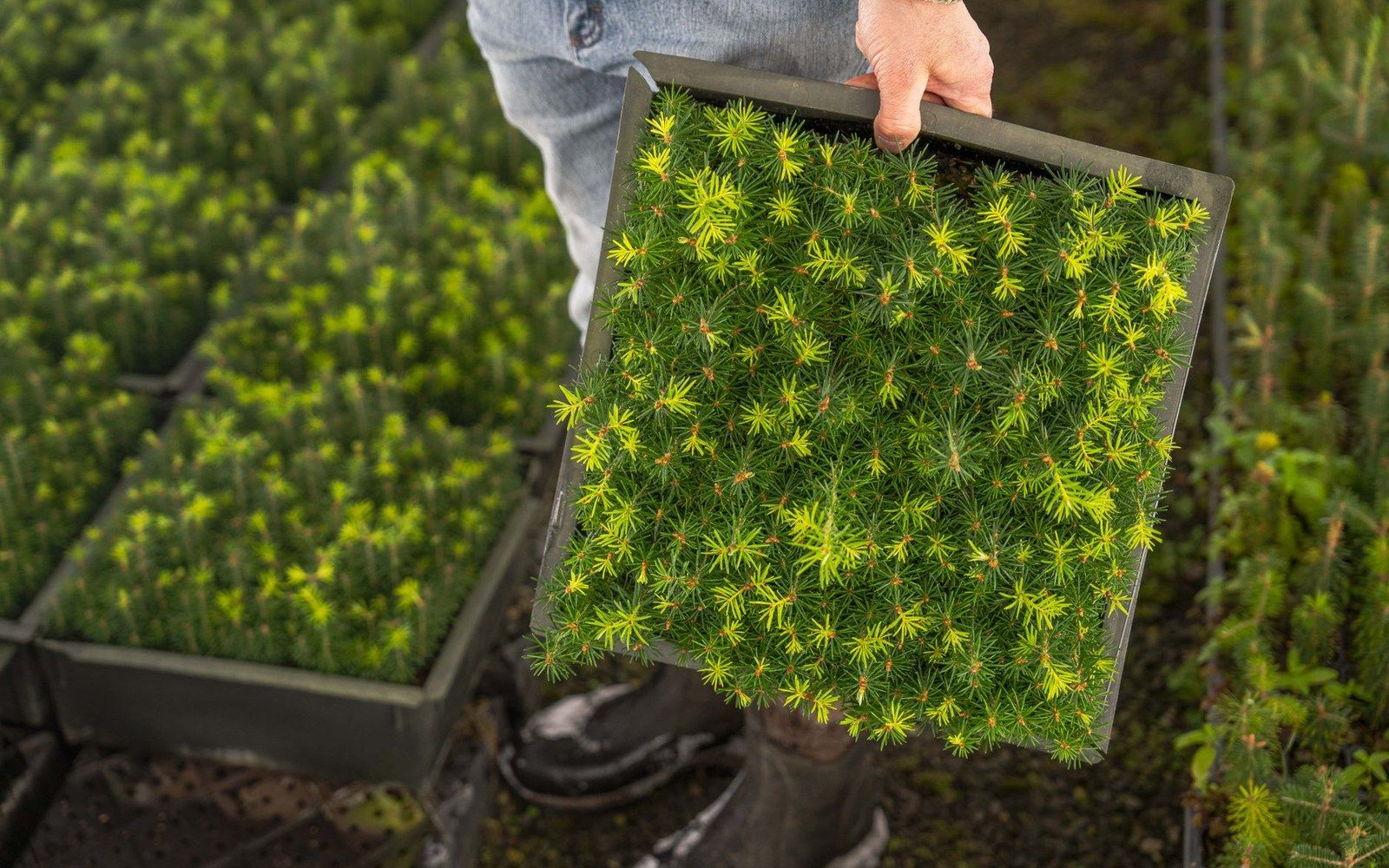
Seedling trays. Pernambuco takes decades to reach a size a bow stick can be cut from.
Photo: Mark Stebnicki / PexelsSeedling trays. Pernambuco takes decades to reach a size a bow stick can be cut from.
Photo: Mark Stebnicki / PexelsA Forest Cut Down, a Nursery Begun
The Mata Atlântica once extended across roughly 1.5 million square kilometres of coastal Brazil; current surveys place intact remnants at around twelve to fifteen percent of that original cover, with Paubrasilia echinata gone from most of its former range in the states of Pernambuco, Bahia, Espírito Santo and Rio de Janeiro. Against that baseline, the replanting record is instructive precisely in its scale.
The most consistently cited initiative is the programme associated with the International Pernambuco Conservation Initiative (IPCI), founded in 2000 and drawing membership from professional bow-making associations in Europe and North America. Published reports from the programme describe seedling nurseries established in Bahia and Espírito Santo in collaboration with Brazilian forestry institutions. Figures cited in publicly available summaries reference plantings in the range of several hundred thousand seedlings distributed to smallholders and reforestation sites over the programme's first two decades, though independent verification of totals against plantation survival rates remains limited in the peer-reviewed literature.
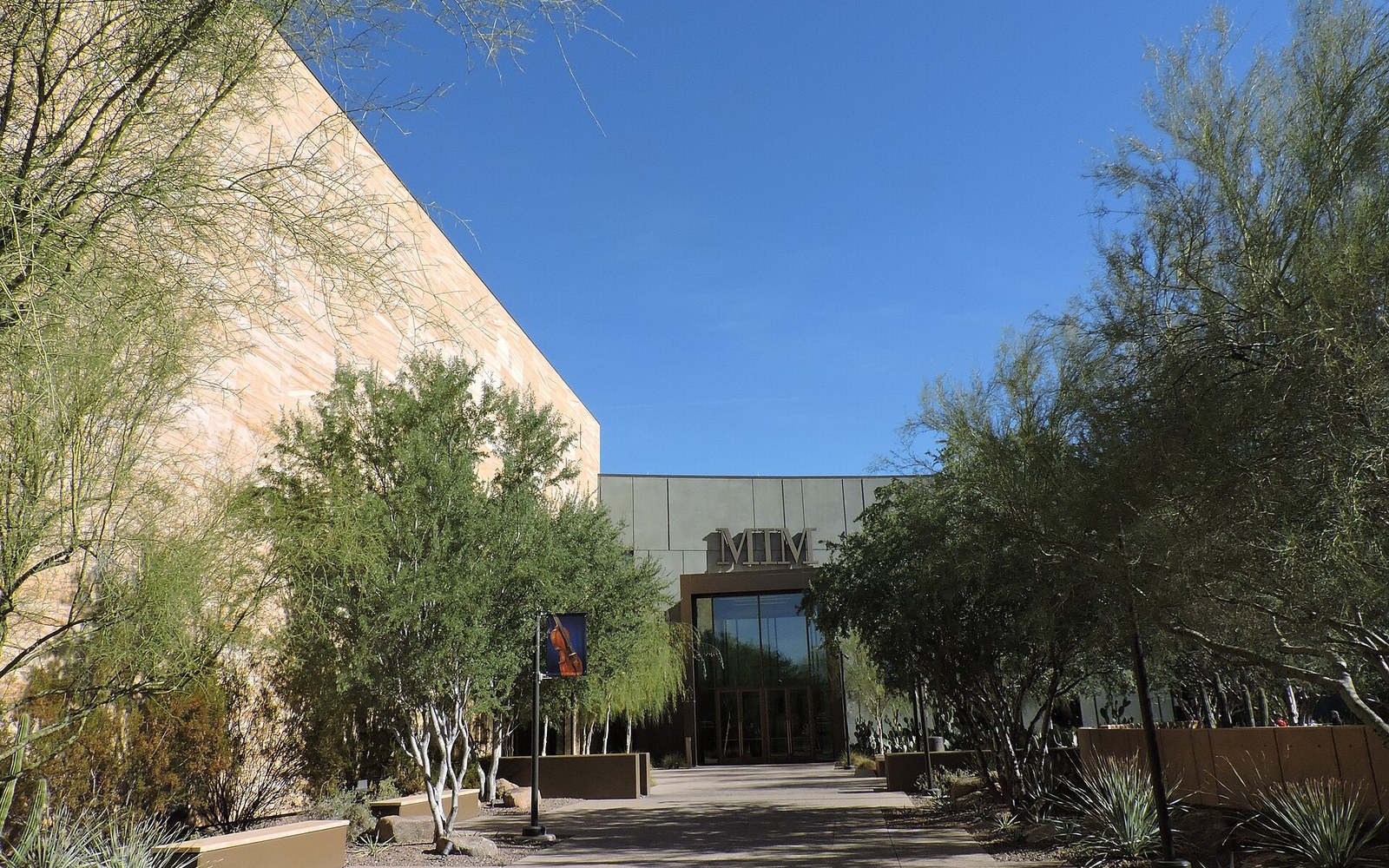
Phoenix holds bows in a public collection, catalogued and open to view, which a private holding is not.
Photo: Musical Instrument Museum, Phoenix AZ · Wikimedia CommonsBrazil's own environmental agency, IBAMA, maintains records of permitted cultivation and monitors compliance with regulations governing Paubrasilia echinata as a protected species under national law. Some reforestation has also taken place within Atlantic Forest restoration projects that target biodiversity more broadly, where pernambuco appears as one species among many rather than the principal subject.
The IUCN Red List assessment, which classifies Paubrasilia echinata as Endangered, notes that the species' slow growth — trees suitable for bow-making require decades to reach useful size and density — means that even well-documented planting cannot translate into harvestable timber on any near-term horizon. A seedling planted today will not yield a bow stick in the working lifetime of the craftsperson who plants it.
What the replanting programmes represent, then, is an honest signal of professional responsibility rather than a restoration of supply. They document that the bow-making trade acknowledged its dependence and acted on it; they do not document a solved problem. The forest that produced two centuries of instruments by makers from Tourte to Sartory grew over millennia, and the arithmetic of replacement is unforgiving.
| Atlantic Forest original extent | roughly 1.5 million km² |
| Intact remnants today | approximately 12–15% of original cover |
| Paubrasilia echinata classification | IUCN Endangered |
| IPCI planting estimates | several hundred thousand seedlings over two decades (figures from programme summaries; peer-reviewed verification limited) |
| Time to harvestable timber | multiple decades minimum; beyond most working lifetimes |