The Dye That Named a Country
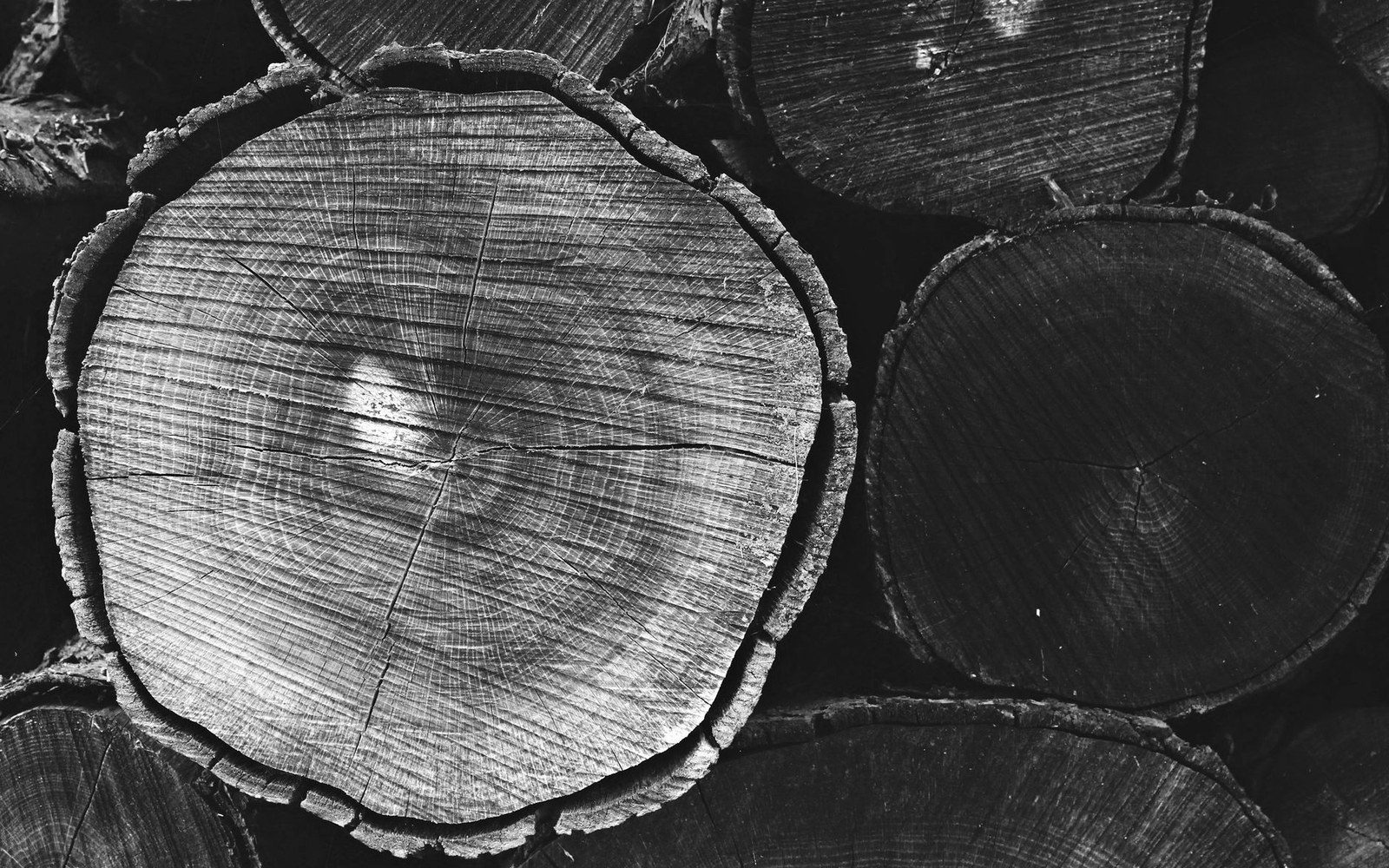
Growth rings and red heartwood. Brazilin, the dye that named the country, comes out of that colour.
Photo: Pixabay / Pexels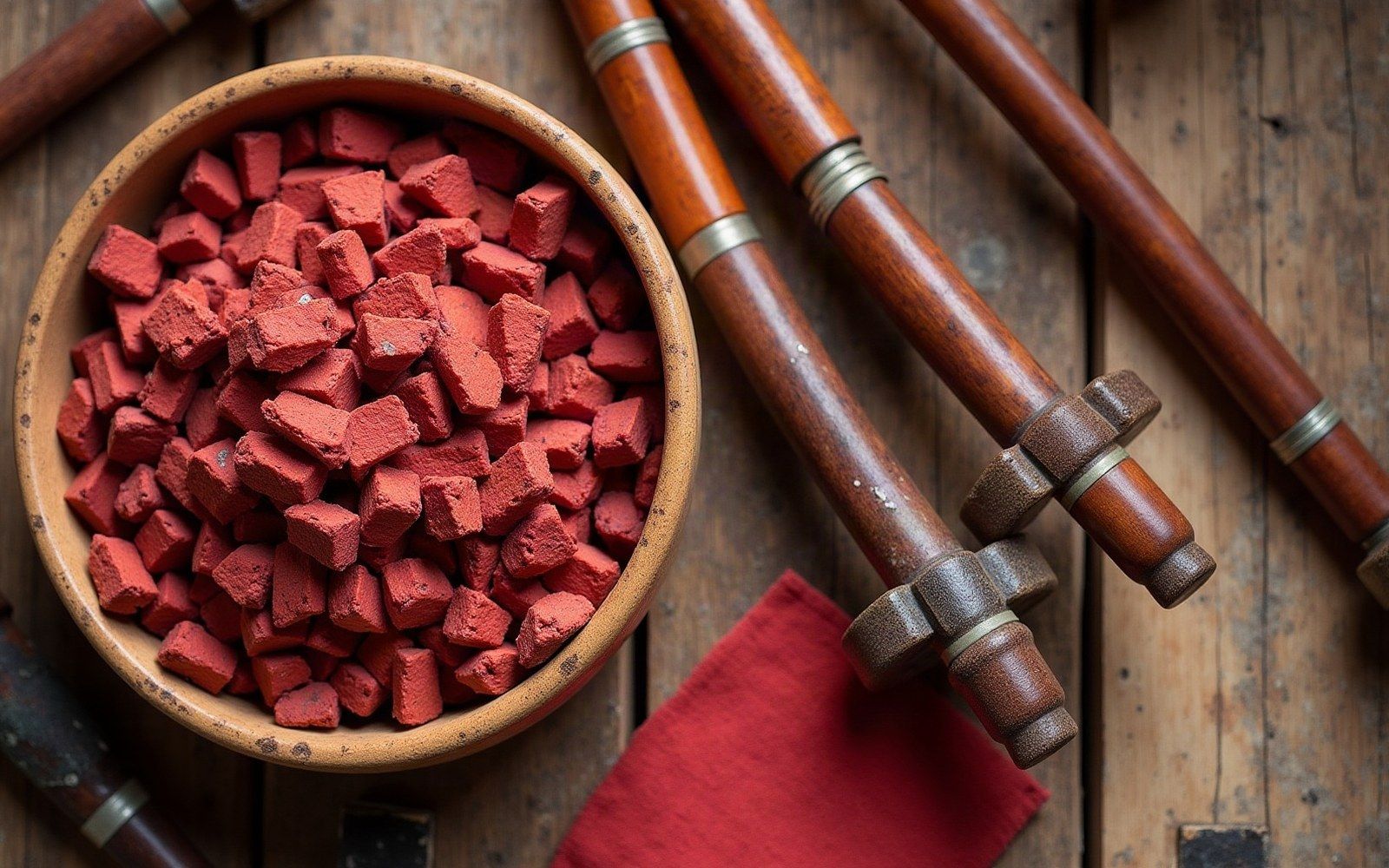
Dyewood chips and the red they yield. The dye trade ran for 250 years before the bow trade began.
Before There Was a Bow, There Was a Market for Red
The pernambuco tree did not enter European consciousness as a bow wood. It entered as a dyestuff — brilliant, fast and commercially irresistible — and the cutting that followed predated François Xavier Tourte by roughly three centuries. Any account of the timber's depletion that begins in the eighteenth-century workshops of Paris or Mirecourt is starting too late.
When Portuguese navigators reached the coast of South America in 1500, they found forests dense with a spiny hardwood the indigenous Tupi people had long used for red pigment. The Portuguese recognised it immediately as a close relative of a dye wood already traded from Asia under the name pau-brasil — stick of ember, or glowing wood — a reference to the deep red heartwood that, when ground and dissolved, yielded a luminous scarlet dye. The new territory took the tree's commercial name rather than the reverse: the land was Brazil because the wood was there first, in quantities that dwarfed anything the Asian trade could supply.
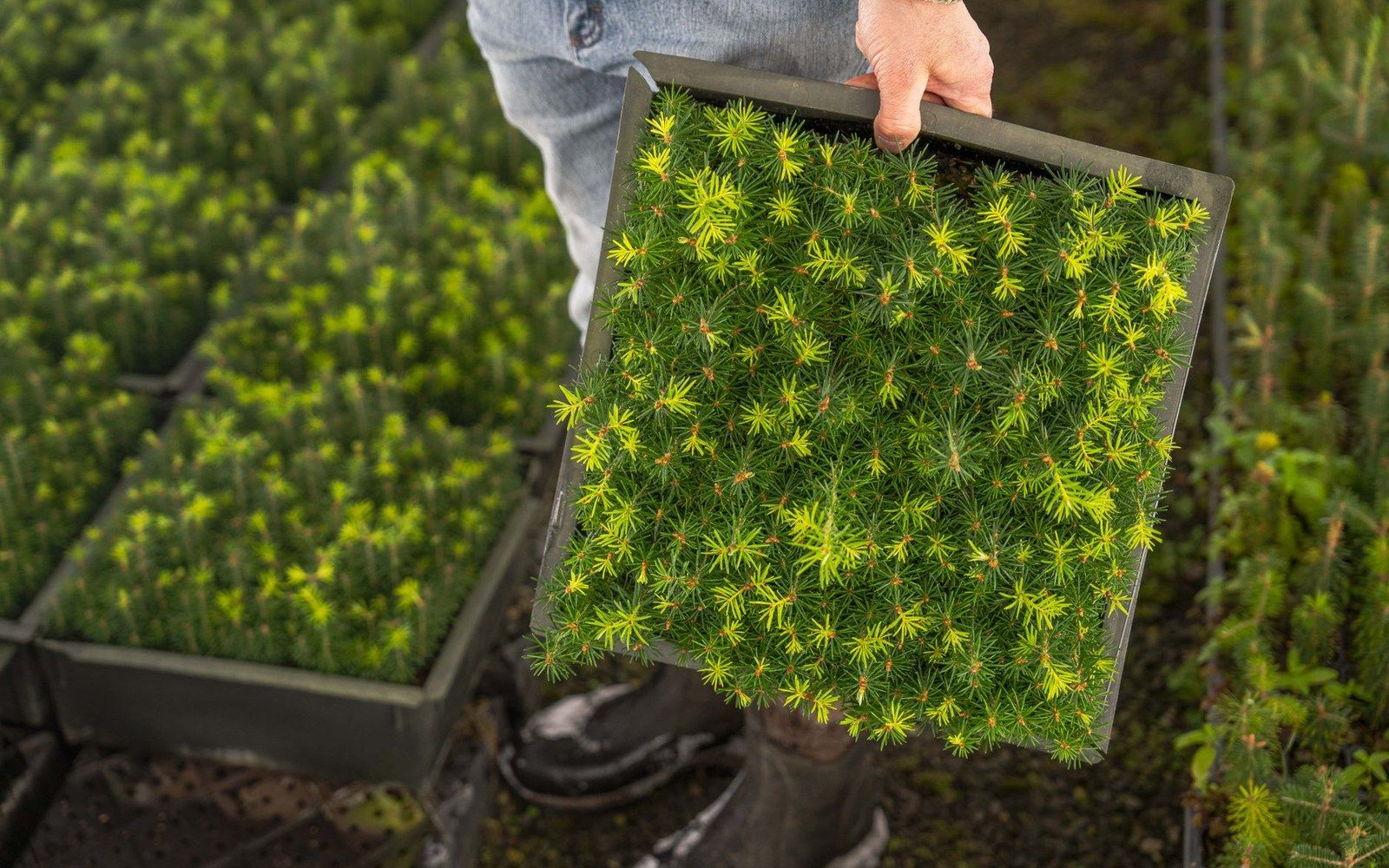
Seedling trays. Pernambuco takes decades to reach a size a bow stick can be cut from.
Photo: Mark Stebnicki / PexelsThe active compound responsible is brazilin, a colourless phenolic compound present in the heartwood that oxidises on contact with air to produce brazilein, the vivid red chromophore that European textile merchants wanted. Wool, silk and linen took the colour well. Through the sixteenth and seventeenth centuries, European demand for bright red dyes — in an era before synthetic alternatives — was structurally insatiable. Cochineal from Mexico dominated the scarlet trade, but brazilein offered a distinct red-orange warmth, and the Atlantic Forest supplied it in abundance.
A Colony Built on Extraction
The Portuguese Crown organised the pau-brasil trade as a royal monopoly almost from the outset, licensing contractors — feitorias, trading posts — to oversee the cutting and export. Indigenous labour, coerced and later enslaved African labour, did the felling. The tree was not farmed; it was hunted through the forest. Because Paubrasilia echinata grows slowly and does not regenerate quickly in cleared ground, each harvested stand was effectively a permanent loss. The logs were shipped to Lisbon, and from there to dye houses in Antwerp, London, Lyon and elsewhere across the Continent.
By the late seventeenth century, the most accessible coastal stands — the forests of what are now Pernambuco, Bahia, Espírito Santo and Rio de Janeiro — had been substantially thinned. The extraction frontier moved inland, but the wood grew sparser. Synthetic alizarin dyes, developed in the nineteenth century, eventually ended the dyestuff market. By that point, however, the ecological damage was already generations deep. What remains of the Mata Atlântica today — estimates put intact Atlantic Forest cover at somewhere between 12 and 16 percent of its original extent, according to published assessments by the SOS Mata Atlântica Foundation — is partly a consequence of colonial dye extraction, though agriculture and development have been far larger drivers in the centuries since.
What the dye trade established, and what mattered for everything that followed, was a template of extraction without replanting. The timber was abundant, the demand was external, the regulatory capacity of the colonial state was minimal and the tree's own biology — slow-growing, slow to reproduce, endemic to a single biome — made it poorly suited to industrial harvesting. When European bow makers discovered in the mid-to-late eighteenth century that the same dense, resilient heartwood that produced the dye also possessed mechanical properties unlike any other timber available for the purpose, they inherited a resource already diminished by more than two centuries of prior trade.
The naming of a country after a commodity is not unusual in colonial history. What is unusual is the continuity: the wood that gave Brazil its name is still being regulated, still being studied and still being argued over — now under CITES Appendix II listing rather than a Crown monopoly, but with the same underlying tension between external demand and a finite, slow-replenishing supply. The dye trade is finished. The pressure on the tree is not.
- c. 1500Portuguese contact with the Atlantic Forest coast; pau-brasil identified as a dye source
- Early 1500sPortuguese Crown establishes the pau-brasil trade as a royal monopoly
- 16th–17th centuriesPeak European dye demand; coastal stands of Paubrasilia echinata progressively cleared
- Late 17th centuryAccessible coastal forests substantially thinned; extraction frontier moves inland
- Mid-to-late 18th centuryEuropean bow makers identify pernambuco as the premier bow-stick timber
- 19th centurySynthetic alizarin dyes displace brazilein; dye trade collapses
- 2007Paubrasilia echinata listed on CITES Appendix II; export of worked bows regulated