The Musical Instrument Museum in Phoenix: What a Public Collection Records

Coastal Bahia. Paubrasilia echinata is endemic to this forest and grows wild nowhere else.
Photo: Malcoln Oliveira / Pexels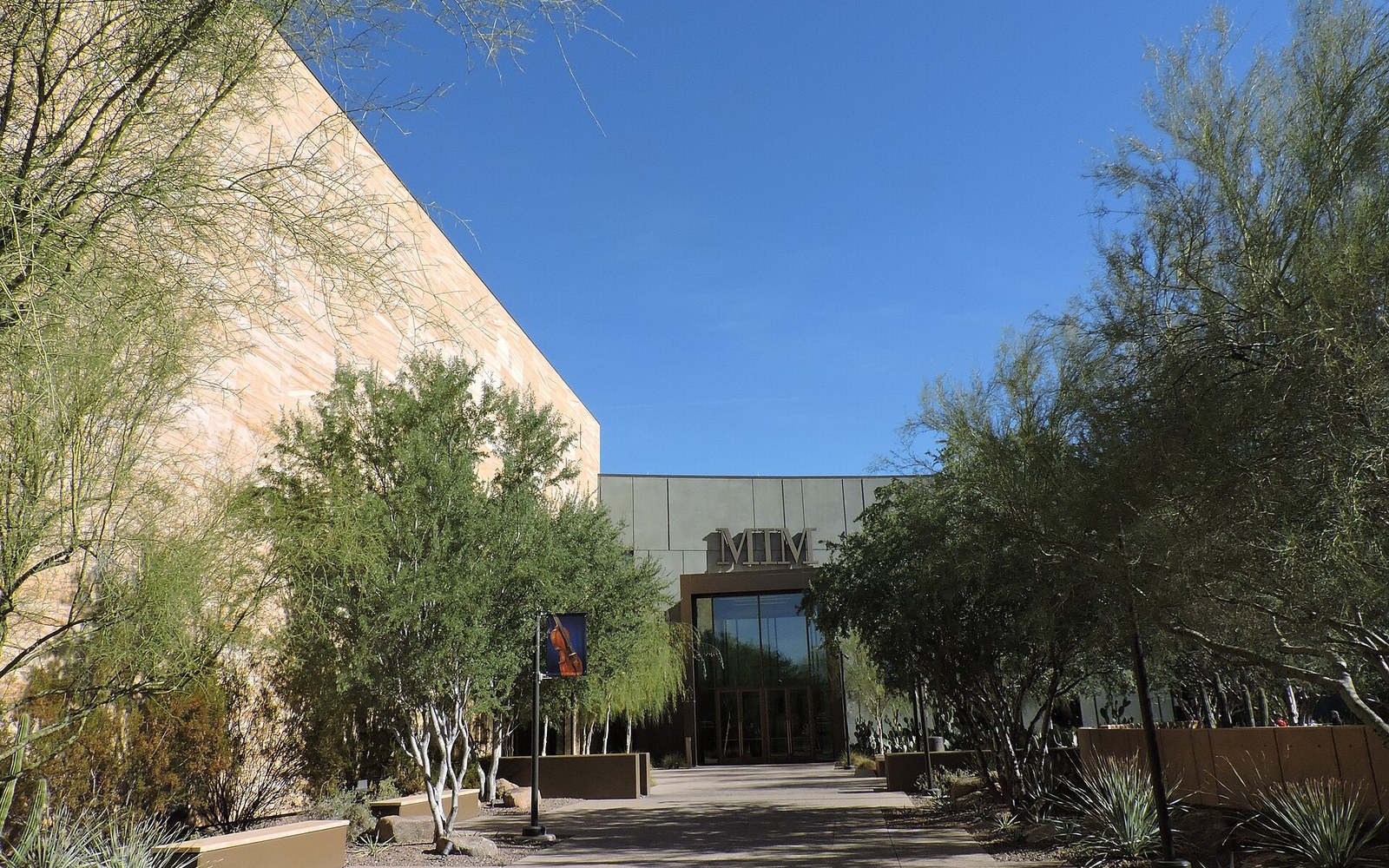
Phoenix keeps its instruments in a public collection, catalogued and open to view, which a private holding is not.
Photo: Musical Instrument Museum, Phoenix AZ · Wikimedia CommonsWhat Glass Cases Do That a Workshop Cannot
The Musical Instrument Museum in Phoenix, Arizona holds one of the largest publicly accessible instrument collections in the world, with holdings drawn from more than two hundred countries and territories. Unlike the instrument rooms of the Ashmolean Museum and the Cité de la Musique, which built their string collections around European art-music traditions, the MIM organises its displays geographically, placing bowed instruments within the cultural contexts that produced them. A Mongolian morin khuur sits near a Brazilian rabeca; a European violin bow appears alongside the instruments and playing practices it belongs to.
That curatorial logic makes the MIM's collection something a private holding cannot replicate: a record of what bowing means across traditions, not only within the Franco-German lineage that produced François Xavier Tourte and the modern violin bow. Where a specialist collection documents refinement within a single tradition, a geographically organised public museum documents divergence — different solutions to the same mechanical problem of drawing a resonating string.
Two catalogues, two philosophies: the bow as art history, or as part of an instrument's working life.
Photo: Tamula Aura / PexelsFor researchers, the public-access dimension carries its own weight. The MIM's published catalogue and online collection records make acquisition data, geographic attribution and instrument descriptions available without institutional affiliation. An auction specialist, a conservation researcher or an instrument maker can consult the same records. That transparency is not incidental: provenance and attribution held in publicly searchable databases serve the documentary record in ways that private ownership, however careful, structurally cannot.
The museum's setting — a purpose-built facility opened in 2010 in Phoenix — also reflects a deliberate argument that musical instrument collections belong in dedicated public institutions rather than as adjuncts to fine-art or ethnographic museums. The CITES-regulated materials present in older European bows, including pernambuco sticks and ivory or tortoiseshell frog components, are documented and held within that framework rather than circulating in trade. A bow under glass remains subject to that regulatory pressure; what it gains is permanence in the record.
- 2010Musical Instrument Museum opens in Phoenix, Arizona