Seventy-Five Centimetres, Sixty Grams, and Nobody Has Improved On It
The proportions François Xavier Tourte settled around 1785 have not moved in two centuries. That stability is not conservatism — it is evidence.
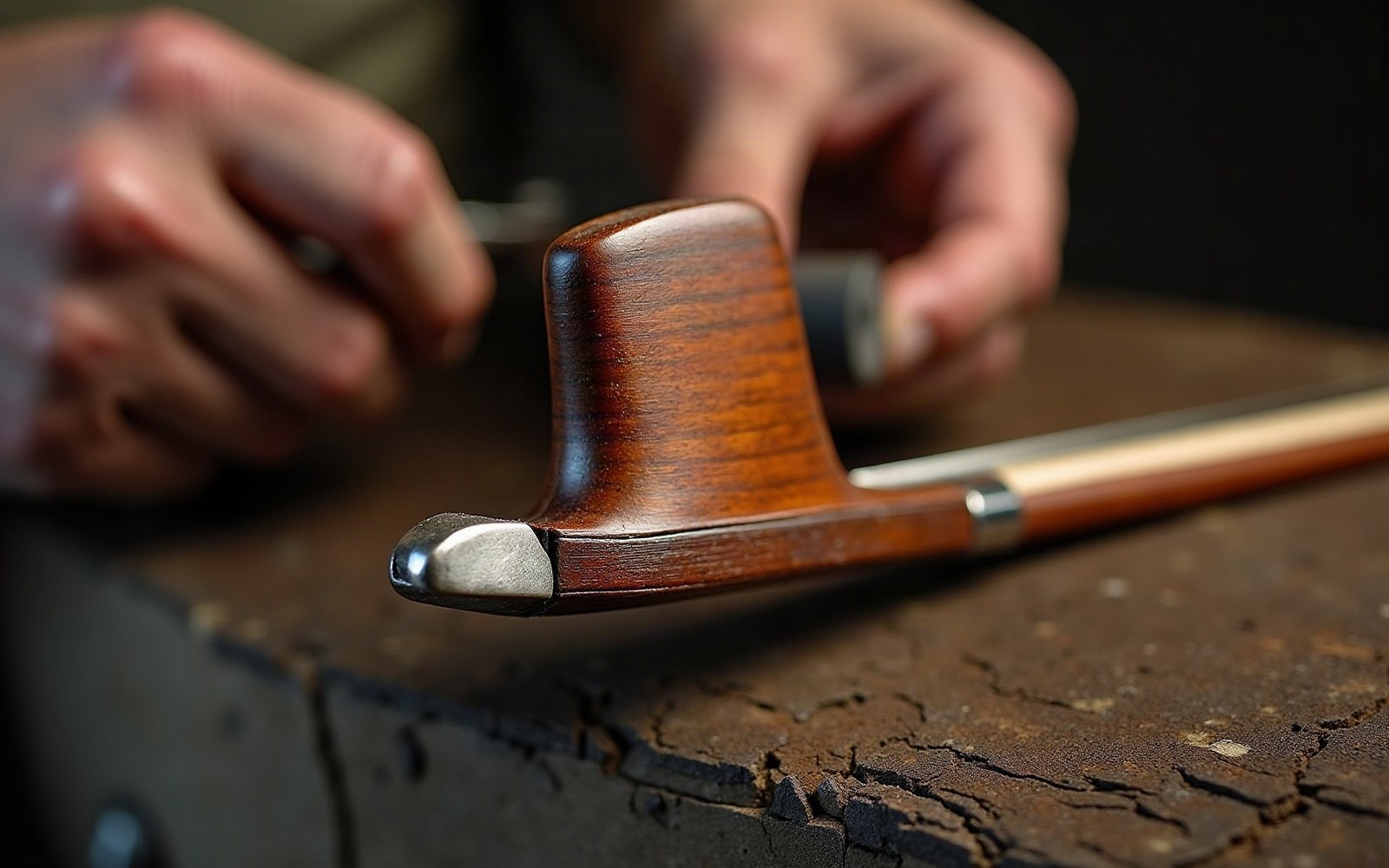
The head plate protects the mortise where the hair is wedged. Ivory was standard here until the trade bans.
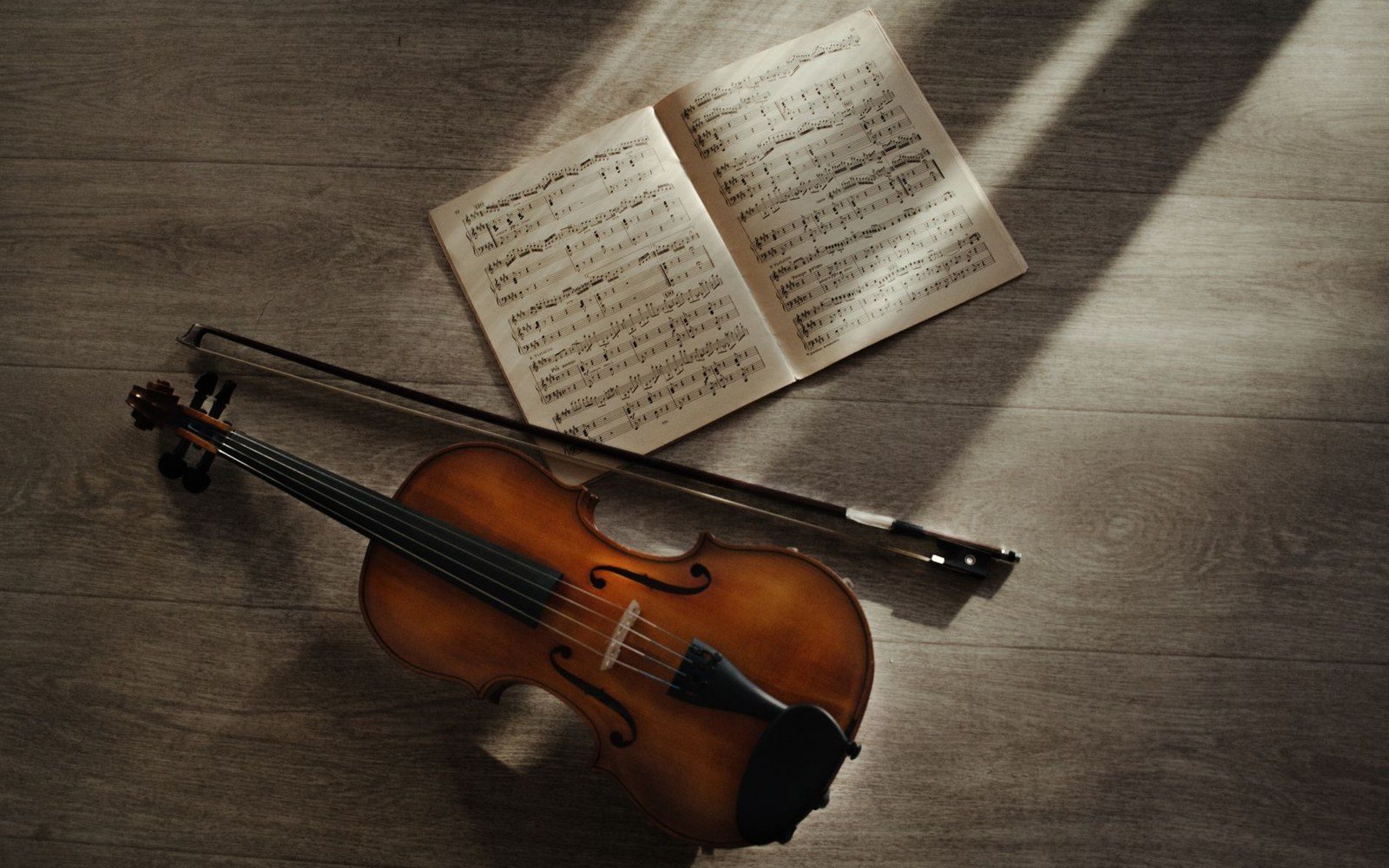
74 to 75 centimetres from button to tip, 58 to 64 grams. The figures came out of one Paris workshop and were never revised.
Photo: Daria Nekipelova / PexelsThe Numbers and Where They Come From
A modern violin bow measures approximately 74 to 75 centimetres from the button at the base of the frog to the tip of the head. It weighs between 58 and 64 grams, with the centre of gravity falling roughly at the balance point a player feels when the stick rests across a finger at the lower third. The camber — the slight inward curve of the stick toward the hair — produces a neutral tension against which the player's arm works. These figures are not written in any treaty or guild regulation. They emerged from one maker's workshop in Paris over the course of roughly a decade straddling 1785, and they have not required revision since.
François Xavier Tourte was not working from acoustic theory. He was a bowmaker's son who trained as a watchmaker, in close metalwork, before turning to bows, and his methods appear to have been empirical: trials with different lengths, weights and wood selections, tested by players who could tell him what responded and what did not. The violinist Giovanni Battista Viotti is consistently named in secondary sources as a collaborator in this process — not a co-designer, but a demanding user whose feedback shaped what Tourte kept. The result, documented in the collections of major European institutions, is a tool so well-matched to the mechanics of string playing that every subsequent generation of makers has treated it as a fixed point rather than a starting position.
Why the Proportions Work
The argument that Tourte's dimensions represent an empirical optimum rather than a convention rests on biomechanics. The playing stroke of a violinist is generated by a combination of upper-arm rotation, forearm extension and wrist articulation. The useful length of that stroke, at the speed and weight typical of musical execution, corresponds almost exactly to the sounding length of a 75-centimetre bow drawn from frog to tip. A significantly shorter bow compresses the phrase; a longer one exceeds the comfortable range of arm travel and introduces control problems at the extremes. The proportion is not cultural — it matches the human arm.
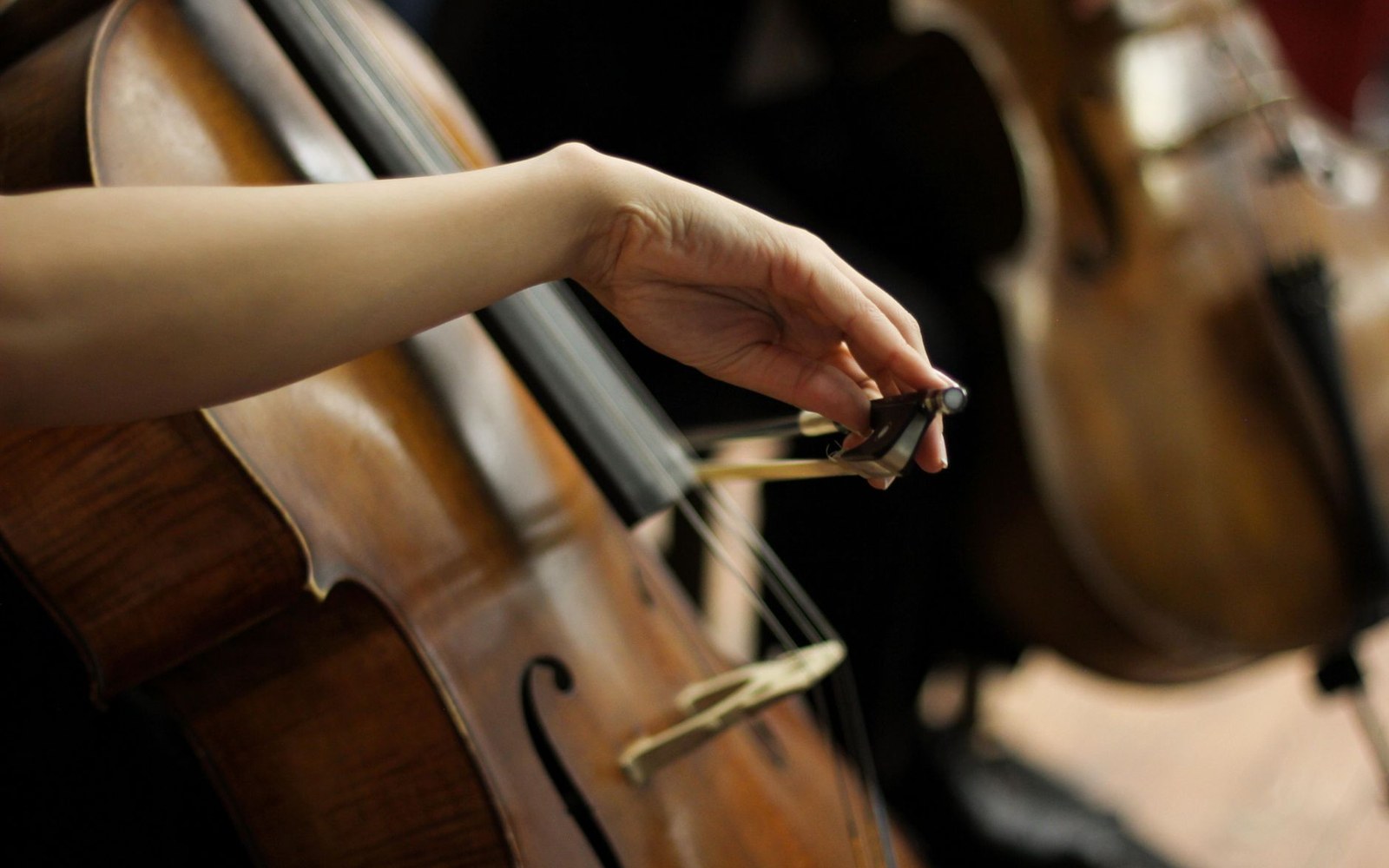
The pre-Tourte stick curves away from the hair rather than towards it — the opposite of the modern camber.
Photo: Burcu Koleli / PexelsWeight works the same way. A stick in the 60-gram range sits at the threshold where gravity contributes to tone production without requiring the player to consciously manage the instrument's mass. Lighter bows feel nimble but thin; heavier bows produce density but fatigue the shoulder and blunt articulation in fast passage work. The 60-gram figure is not a round number someone chose — it is the range at which these competing demands balance, and published mechanical studies of bow stiffness and vibration confirm that the acoustic behaviour of a stick changes measurably outside it.
The camber is the subtlest of the three variables and the one most often misunderstood as purely aesthetic. Tourte established an inward curve that, under the tension of fully tightened hair, flattens to an almost straight playing line. This means the bow is pre-loaded in compression: the hair and the stick are in constant tension against each other, and the player's pressure on the string is added to a system already in dynamic equilibrium. A bow with too little camber becomes concave under tension and loses its resistance; too much, and it never flattens, fighting the player through the stroke. The geometry is a solution to an engineering problem, arrived at by a man who had no engineering vocabulary but clearly understood the problem.
What Subsequent Makers Did With the Template
Every significant maker after Tourte worked within these parameters while varying everything else — wood selection, taper, fluting of the octagonal stick, head geometry, the architecture of the frog. Dominique Peccatte, working in Paris in the second quarter of the nineteenth century, produced sticks of exceptional authority while holding Tourte's length and weight almost exactly. The variations in his bows that specialists and auction catalogues identify — the broader head, the muscular taper — are refinements of character, not challenges to the underlying proportion.
| Stick length | approximately 74–75 cm, from button to tip |
| Playing weight | 58–64 g, centre of gravity in the lower third |
| Camber | inward curve that flattens to near-straight under full hair tension |
| Balance point | roughly at the lower third of the stick length |
François Nicolas Voirin moved toward a more slender aesthetic in the third quarter of the century, and Eugène Sartory pushed that elegance further still in the early twentieth. Hermann Richard Pfretzschner in Markneukirchen and the workshop of W. E. Hill & Sons in London produced instruments across a wide quality range, but neither house deviated from Tourte's governing dimensions. James Tubbs, Étienne Pajeot, Pierre Simon — the entire historical roster of respected makers — are distinguished by what they did within the template, not by what they replaced.
This consensus is not explained by conservatism or guild inertia. The bow trade was competitive, the players demanding, and the market rewarded makers who found advantages. If a bow two centimetres longer had proved demonstrably better, someone would have made it and players would have bought it. The absence of successful deviation is itself data.
The Material That Made the Template Possible
Pernambuco — Paubrasilia echinata, endemic to Brazil's Mata Atlântica — is inseparable from Tourte's achievement. The wood's combination of density, modulus of elasticity and internal damping coefficient produces a stick that flexes through the stroke and returns energy to the hair without absorbing vibration as dead weight. Earlier makers had worked in brazilwood, snakewood and various European hardwoods, and the bow before Tourte's mature period shows it: heavier, stiffer, less responsive. The template Tourte settled could not have been settled in another material; the proportions that work in pernambuco would not work in a wood with different mechanical properties.
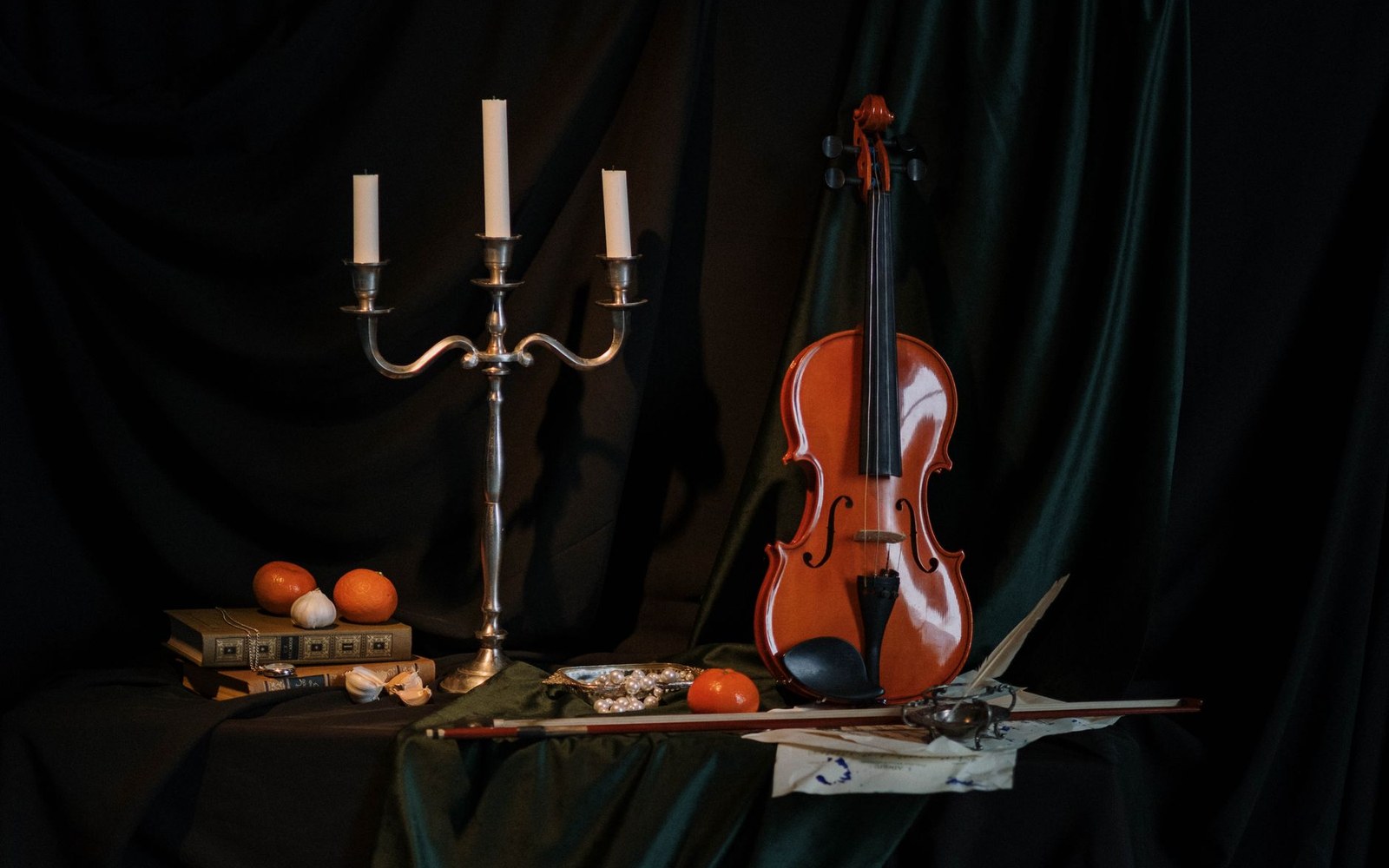
Bow and instrument as a working pair. The bow is a separate object, with its own maker, its own wood and now its own paperwork.
Photo: cottonbro studio / PexelsThis is why the IUCN's Endangered listing of Paubrasilia echinata carries weight beyond conservation concern alone. The wood is not interchangeable; the template is not portable to a substitute. The bow-making community's anxiety about pernambuco supply is not sentimental attachment to a traditional material — it is an understanding that the material is constitutive of the form. Carbon-fibre sticks can replicate the gross dimensions, and published tests show competitive mechanical performance in some parameters. Whether that replication extends to all aspects of playing response remains genuinely contested among players and researchers, and that contest is not closed.
The dimensions Tourte fixed around 1785 have survived not because nobody tried to improve them but because two centuries of trying have not produced something better. That is the closest thing the craft has to a proof.
- c. 1785Tourte settles the governing proportions in Paris
- 1820s–1850sDominique Peccatte refines head geometry and taper; length and weight unchanged
- 1860s–1880sFrançois Nicolas Voirin develops a more slender aesthetic
- 1890s–1920sEugène Sartory and Hermann Richard Pfretzschner extend the tradition into the twentieth century
- Ongoingcarbon-fibre makers adopt the same gross dimensions; acoustic equivalence remains debated