Before the Camber: the Pre-Tourte Bow and the Transitional Stick
The modern bow's defining feature — the inward camber — was the last innovation, not the first. Every element of the instrument arrived in sequence, and the sequence is legible.
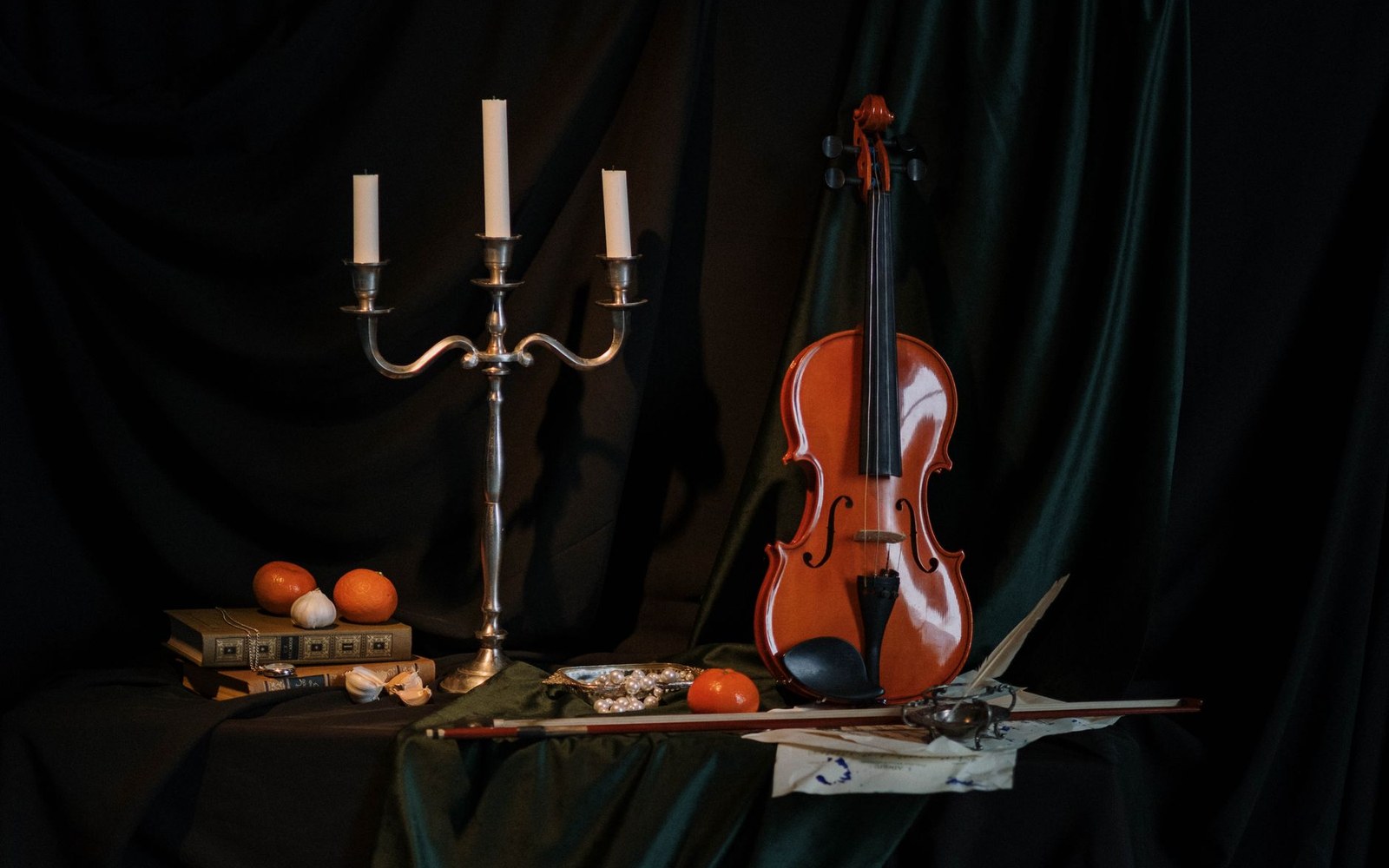
Bow and instrument as a working pair. The bow is a separate object, with its own maker, its own wood and now its own paperwork.
Photo: cottonbro studio / Pexels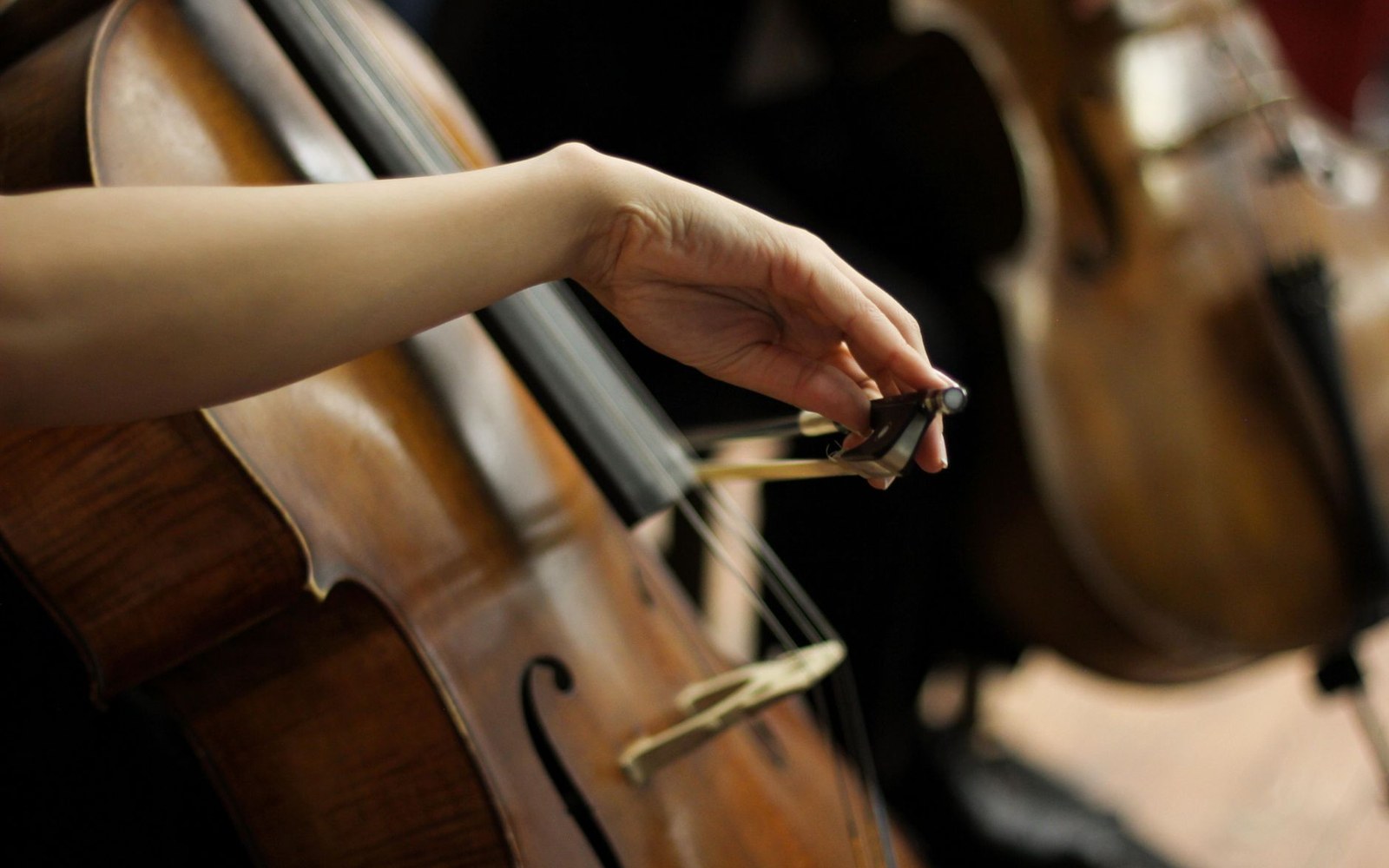
The pre-Tourte stick curves away from the hair rather than towards it — the opposite of the modern camber.
Photo: Burcu Koleli / PexelsA Stick That Bowed the Wrong Way
The baroque bow is distinguished above all by what it lacks: the inward curve toward the hair that gives the modern bow its tension, resilience and controlled rebound. Early bows — those serving the consort music and dance suites of the seventeenth century — were convex outward, the stick arching away from the hair rather than toward it. This geometry produced a naturally relaxed tension at the middle of the bow, favouring the undulating, phrase-punctuating articulation the music demanded. It was not a deficiency; it was a design matched to its repertoire.
The head, too, was different in kind. What instrument historians call the pike-head or hatchet-head — a bevelled, axe-like tip flaring outward from the stick — defined bows well into the early eighteenth century. Surviving examples in the collections of the Ashmolean Museum and the Cité de la Musique show the variety of these head forms, which were neither standardised across workshops nor stable across decades. The frog, meanwhile, was often fixed or only crudely adjustable, with clip-in or hook designs replacing the screw-and-eyelet mechanism that later makers would refine.
Snakewood, Transition, and the Makers Who Bridged the Gap
The material record shifts noticeably across the first half of the eighteenth century. Snakewood — a dense, mottled South American timber, Brosimum guianense — dominated better bow-making before pernambuco established its dominance. It is stiffer and heavier than pernambuco, less forgiving in response, but capable of the slender profiles the transitional stick required. Several bows attributed to the workshop of the London maker James Tubbs's predecessors, and to French provincial makers active in Mirecourt before the consolidation of that trade, survive in snakewood, documenting the period when material and form were still in negotiation.
The ferrule spreads the hair into an even ribbon; without it the hank bunches at the frog.
Photo: FOX ^.ᆽ.^= ∫ / PexelsThe transitional period — roughly 1730 to 1785 — is characterised by incremental convergence toward modern proportions. The pike-head gave way to a narrower, more upright tip. The stick's camber, still outward in the earliest transitional bows, gradually flattened, and in some surviving examples from the 1760s and 1770s tips slightly inward — the new geometry arriving tentatively before it was committed to. John Dodd in London and the makers of Mirecourt were working through exactly this period, their output straddling the older convex models and the new proportions that Tourte would fix.
The frog changed in parallel. Adjustable frogs with functional screw mechanisms appear consistently in bows from around the 1750s onward, though their dimensions and the geometry of the mortise varied considerably. The ferrule — the metal band that spreads the ribbon of horsehair to uniform width — became standard hardware over this same period, replacing the lapped or tied arrangements visible in earlier instruments.
What Tourte Settled, and What Was Already There
By the time François Xavier Tourte arrived at his mature practice in the 1780s, most of the constituent problems had been solved individually. The screw-tensioned frog existed. Pernambuco's mechanical advantages — its exceptional ratio of stiffness to weight, its low internal damping coefficient — were being exploited, if not yet systematically understood. The head form was converging on the high, narrow profile that survives unchanged today. What Tourte contributed was synthesis and standardisation: the decisive inward camber, the particular graduated taper of the stick, and the proportions that subsequent makers found impossible to improve upon.
The pre-Tourte bow is therefore not a failed attempt at the modern instrument. It is a series of working solutions to the problem of exciting a string, each adequate to the music of its moment — and each legible, in hindsight, as a step in the sequence that camber closed.
- Pre-1700fully convex stick, pike-head (hatchet) tip, fixed or hook frog
- c. 1700–1730pike-head begins to narrow; some adjustable frogs appear
- c. 1730–1760snakewood dominant; camber flattens; screw frog becomes standard
- c. 1760–1785slight inward camber appears in some examples; pernambuco displacing snakewood; ferrule standardised
- c. 1785Tourte settles the form: decisive inward camber, graduated taper, modern proportions