The Frog, the Ferrule and the Eyelet
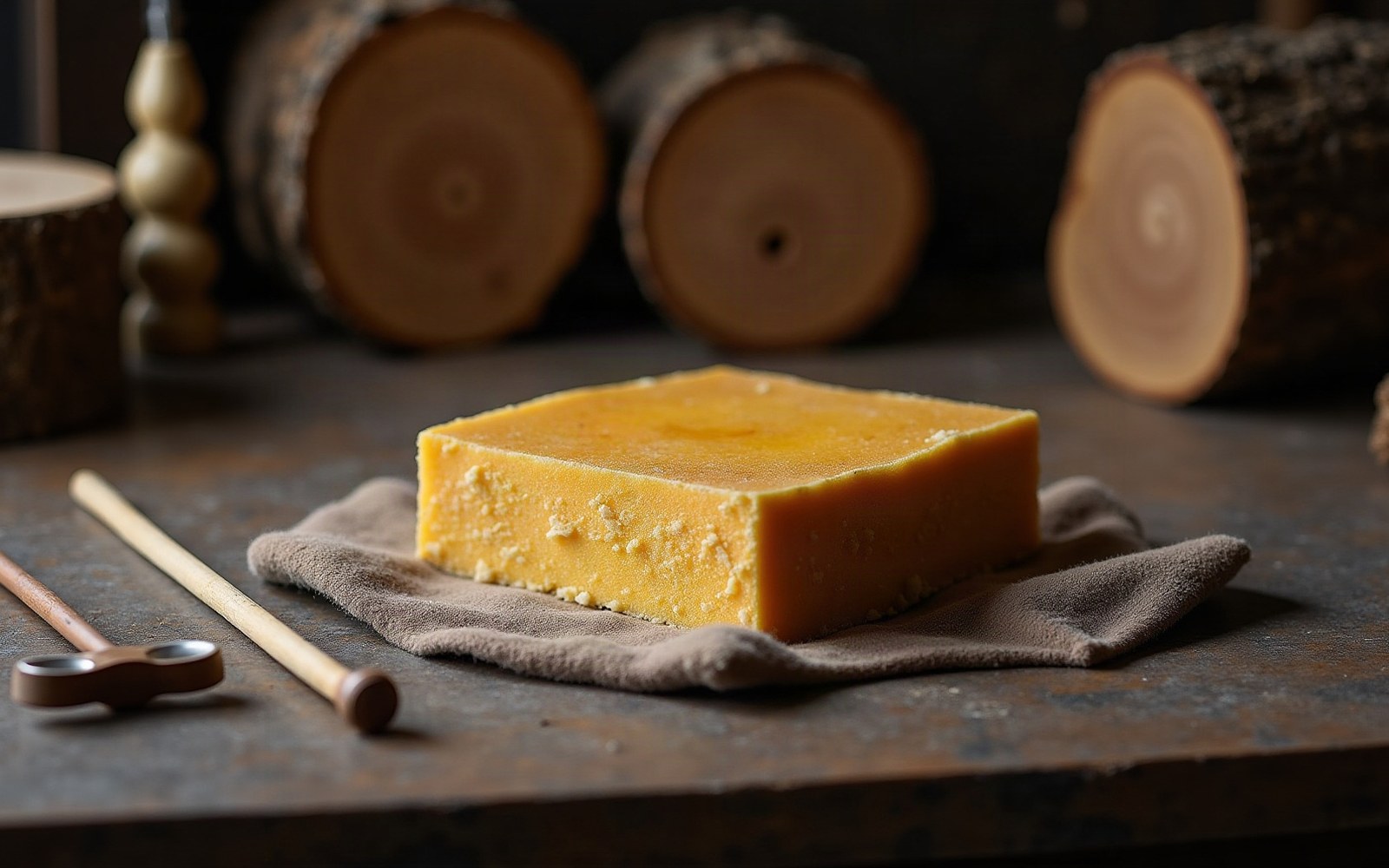
Rosin wears to the width of the hair. The groove is a record of how the bow has been drawn.
The ferrule spreads the hair into an even ribbon; without it the hank bunches at the frog.
Photo: FOX ^.ᆽ.^= ∫ / PexelsThree Parts That Solve One Problem
The lower end of a violin bow looks, at a glance, like ornament: a shaped block of ebony or tortoiseshell, a gleaming metal band, a pearl slide beneath a button. Everything there is in fact mechanical. Those three components — frog, ferrule and eyelet — exist to anchor a ribbon of horsehair, spread it to a working width, and allow the player to adjust its tension from performance to performance. Each one does a distinct job, and the materials chosen for each reflect two centuries of accumulated maker knowledge.
The frog is the removable block that sits at the lower end of the stick and carries the hair's lower termination. It is hollowed, so that the stick's heel fits into a slot — the mortise — cut into the frog's upper face, and the block slides along the stick on a metal rail or tongue. This sliding is the mechanism by which tension is varied: the player turns the button at the extreme end of the stick, which rotates a threaded rod, which advances or retreats the frog by engaging the eyelet inside it. The frog never comes free in normal use; it travels only a few millimetres, but that range is enough to shift the hair from slack to playing tension and back again. Without this capacity the hair would either always be taut — damaging the stick's camber over time — or always loose, useless until separately tightened for every session.
Hair is a consumable and the stick is not. The cuticle scales that hold rosin wear flat with use.
Photo: Engin Akyurt / PexelsEbony has dominated frog construction since the late eighteenth century and remains standard. François Xavier Tourte is associated with the settled form of the modern frog, including the distinctive Paris eye — an oval pearl inlay set into the frog's outer face whose decorative role is inseparable from the maker's identifying hand. Tortoiseshell was used through much of the eighteenth and into the nineteenth century, prized for its translucency and warm colour; CITES listing of hawksbill turtle products ended its commercial availability by the 1970s and 1980s, and synthetic substitutes now fill that aesthetic niche. Ivory appeared on some frogs and buttons, again now regulated under CITES. Makers in the Mirecourt tradition — among them Dominique Peccatte and later François Nicolas Voirin — developed refined ebony frogs whose proportions and chamfering became signatures as recognisable as the sticks themselves.
The ferrule is the metal band — usually silver, occasionally nickel — that wraps the open lower face of the frog and holds the spread of horsehair in a flat, even ribbon. Without it, the hair bundle would collapse or fan unevenly, concentrating pressure at the bow's edge and producing an uncontrolled contact patch on the string. The ferrule is essentially a forming tool fixed in place: it determines exactly how wide the hair ribbon sits, and its inner face is typically undercut with a small ledge against which the hair is packed before the wedge is set. Silver is preferred for its workability and visual warmth; plated nickel appears on student or workshop-grade bows. The ferrule is soldered or press-fit rather than screwed, making it technically permanent but replaceable by a skilled rehairer.
The eyelet is the smallest component and, mechanically, the critical one. It is a threaded metal insert — typically brass — pressed into a channel cut through the frog from face to face. The threaded rod attached to the button engages this insert, and as the button turns, the eyelet converts rotational motion into linear travel, drawing the frog toward or away from the head. Wear in the eyelet, or in the rod's thread, produces the looseness players sometimes call "play" in the button — a slop that breaks the mechanical link between turning and tensioning. Replacing a worn eyelet is routine workshop work, and many historic bows carry eyelets that are not original. The material is almost invariably brass, chosen for its compatibility with silver-plated steel rods and its resistance to the galling that would result from like-metal contact.
Taken together, the frog, ferrule and eyelet constitute a precision sliding mechanism built from wood and metal, designed to survive daily cycling between tension states across a working life measured in decades. The sophistication is quiet: nothing there announces itself as engineering, yet every dimension — the mortise fit, the ferrule width, the eyelet thread pitch — was refined empirically by makers across the full span of the Franco-German bow-making tradition, and the CITES-regulated materials at the frog's surface encode a longer history still.
| Frog | the sliding block anchoring the lower end of the hair; travels along the stick to vary tension |
| Mortise | the slot in the frog's upper face into which the stick's heel fits |
| Ferrule | the metal band (usually silver) holding the hair ribbon flat and evenly spread |
| Eyelet | the threaded brass insert in the frog that engages the screw rod; converts turning into linear frog travel |
| Button | the knob at the stick's extreme end, rotated by the player to advance or retreat the frog |