Octagonal or Round, and What the Difference Is Worth
Two cross-sections, one long argument, and the mechanical tests that settle less than makers claim.
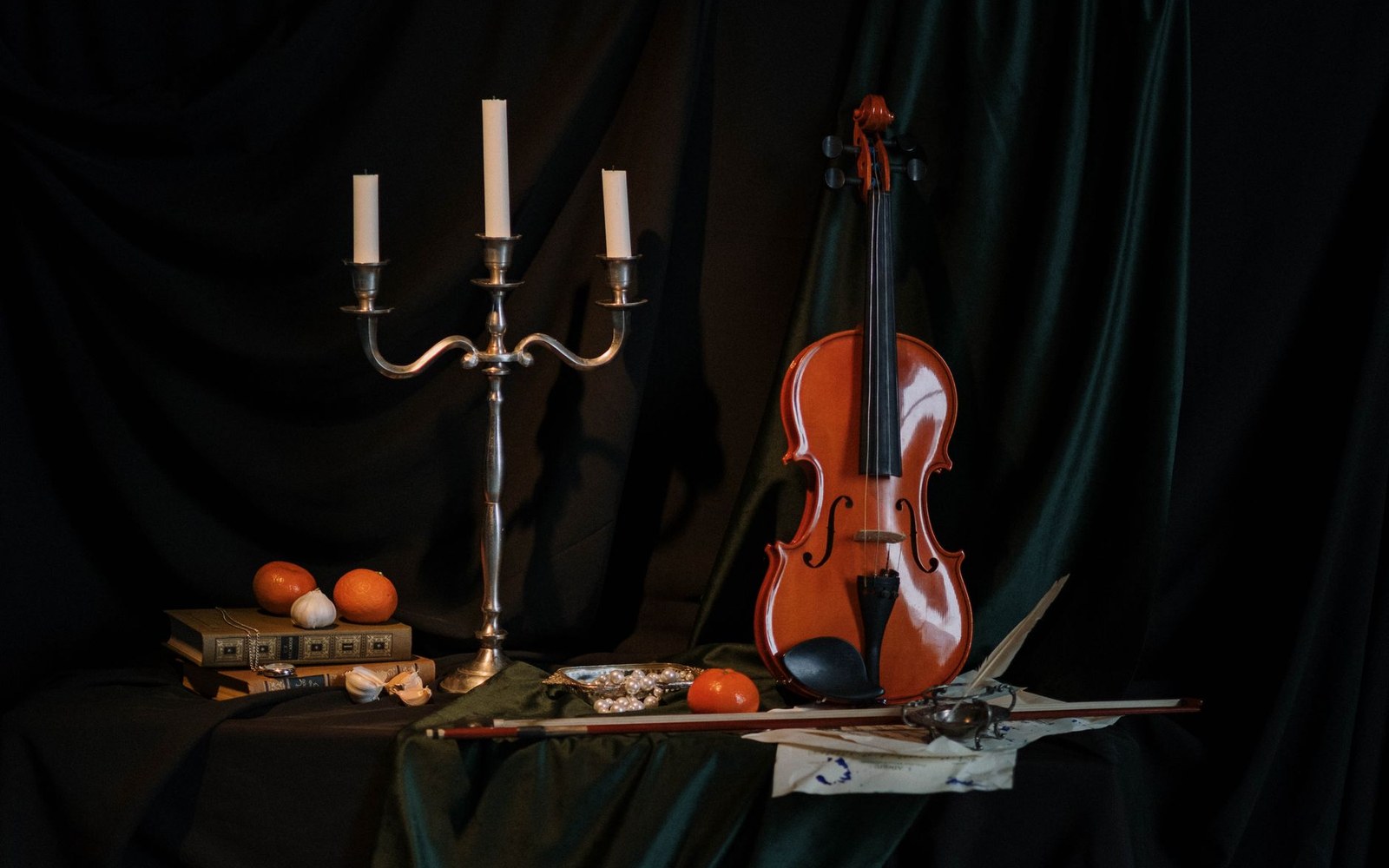
Bow and instrument as a working pair. The bow is a separate object, with its own maker, its own wood and now its own paperwork.
Photo: cottonbro studio / Pexels
Eight planed faces raise lateral stiffness — by less than two billets of the same wood differ from each other.
Photo: wal 172619 / PexelsThe Geometry and What It Does
An octagonal stick — planed to eight flat faces along its length — is measurably stiffer in the lateral plane than a round stick of identical wood and diameter. The geometry redistributes mass slightly away from the neutral axis, raising the second moment of area and therefore the bending stiffness under lateral load. Published studies on bow mechanics, including work summarised in the Journal of the Acoustical Society of America, confirm the stiffness difference is real but modest: within the range that individual pieces of Paubrasilia echinata vary simply through grain angle and density.
Historically, the octagonal form was associated with the Franco-Belgian school and appears consistently in the work of Dominique Peccatte and his circle through the middle decades of the nineteenth century. The round stick became the prestige form in the hands of François Nicolas Voirin and, later, Eugène Sartory, whose tapered round sticks from the late nineteenth and early twentieth centuries set the aesthetic standard that most players now treat as default. W. E. Hill & Sons supplied both forms to the London market, and their catalogue records document that round sticks commanded a consistent premium in price — a market judgment, not an acoustic one.
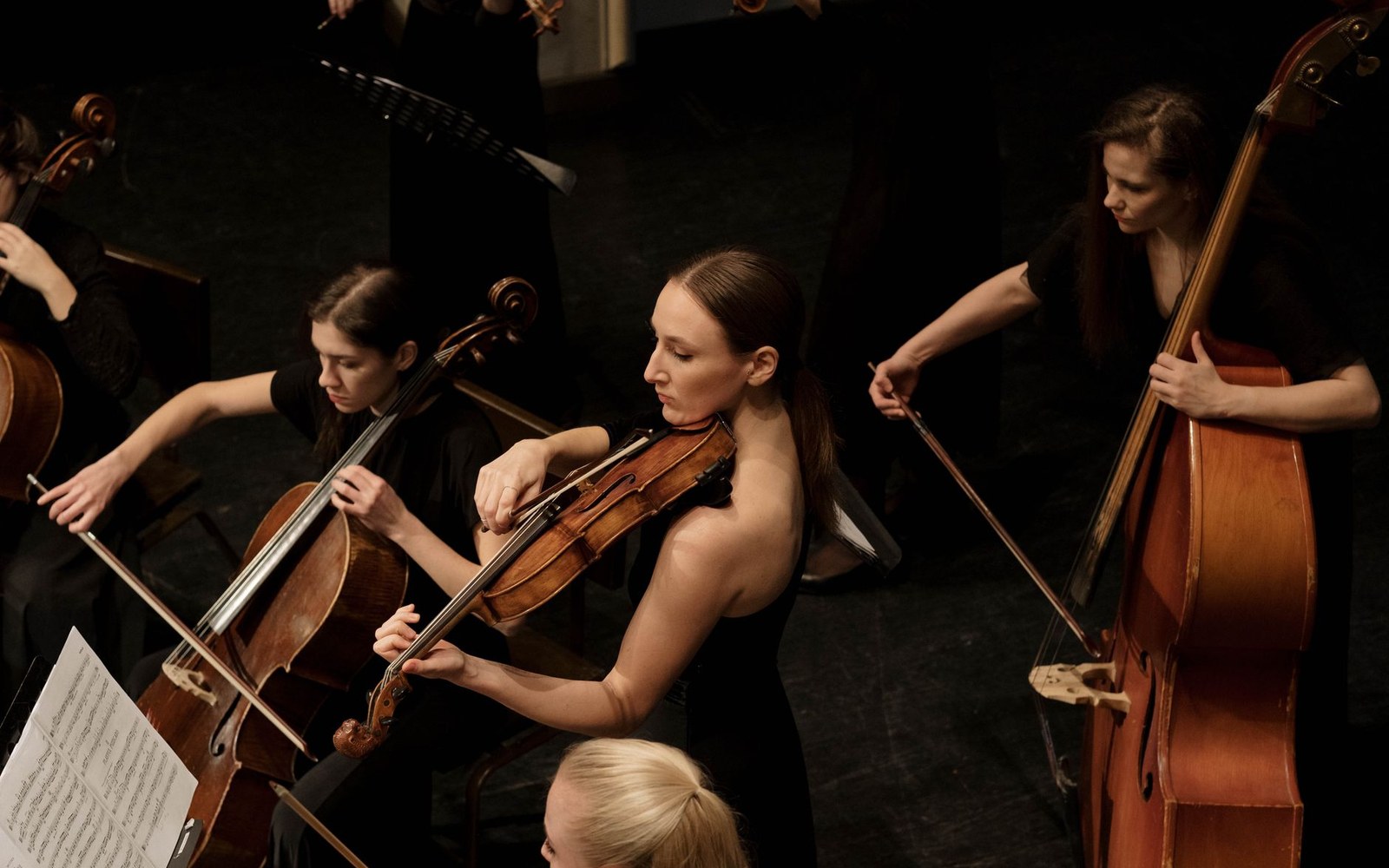
Shorter, heavier, and held two ways: the bass bow is the only one played both overhand and underhand.
Photo: cottonbro studio / PexelsThe acoustic arguments made for each tend to dissolve under scrutiny. Players who prefer octagonal sticks describe a focused, slightly drier response; players who prefer round describe warmth and flexibility. Controlled mechanical testing has not isolated a consistent tonal signature attributable to cross-section alone, once wood grade, weight and camber are held constant. The internal damping coefficient — which genuinely shapes tonal colour — is a property of the wood itself, not of how it was planed.
What the cross-section reliably affects is tactile feedback and visual character. A player's grip reads the flat faces of an octagonal stick differently at the thumb contact point, and that proprioceptive difference is not trivial in practice. Both forms remain in active use across professional orchestras worldwide, and neither has displaced the other. The argument persists precisely because the data do not end it.
- Mid-19th centuryoctagonal form prevalent in Mirecourt, associated with Peccatte school
- Late 19th centuryround stick ascendant through Voirin and successors
- Early 20th centurySartory round stick becomes dominant aesthetic standard
- Presentboth forms in professional use; no consensus