What Changes When the Instrument Gets Larger
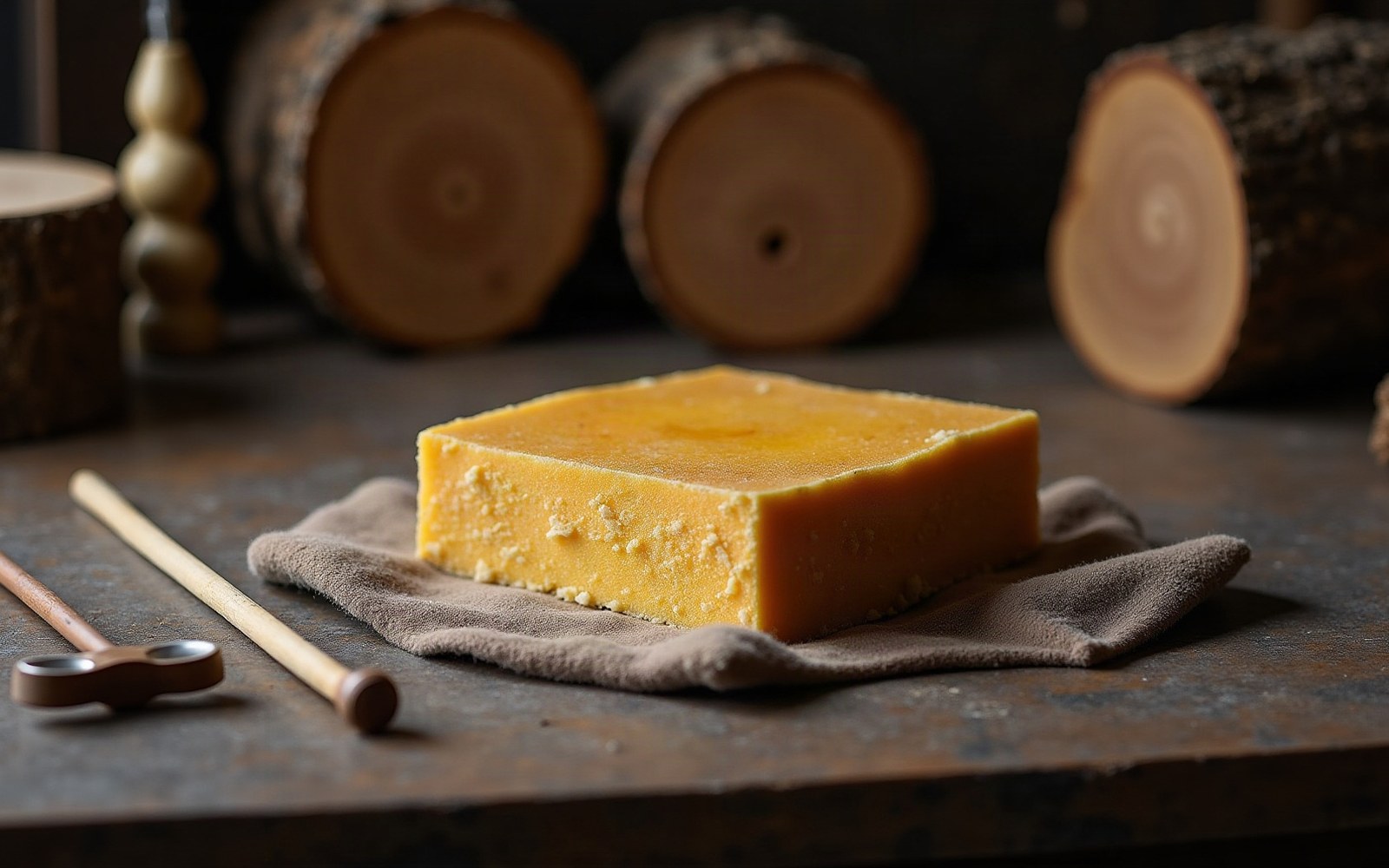
Rosin wears to the width of the hair. The groove is a record of how the bow has been drawn.
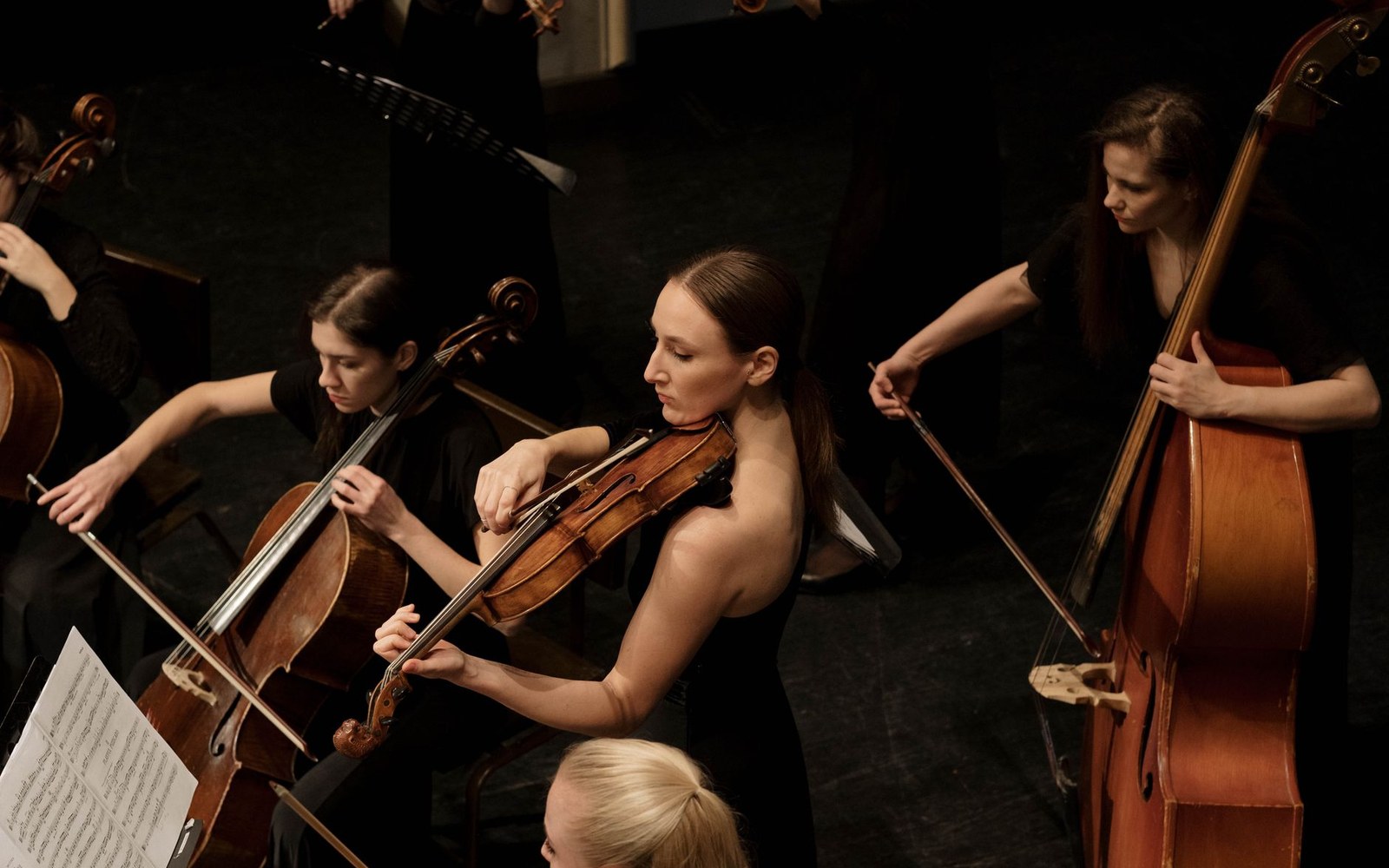
Shorter, heavier, and held two ways: the bass bow is the only one played both overhand and underhand.
Photo: cottonbro studio / PexelsFrom Violin to Bass: Four Instruments, Four Different Tools
The bow a cellist raises is not a scaled violin bow. It is shorter, heavier, wider-haired and differently cambered — a separate instrument in its own right, shaped by the physical demands of longer, thicker strings and a larger resonating body. Moving across the string family from violin to double bass, every principal dimension shifts, and the shifts are not proportional.
The modern violin bow, the format François Xavier Tourte codified around 1785, weighs approximately 60–62 grams and measures roughly 74–75 centimetres in stick length, with a hair ribbon typically 65 centimetres long. The viola bow is marginally heavier — usually 70–74 grams — and fractionally shorter at the stick, a combination that suits the instrument's greater string resistance without demanding a proportionally longer reach. In practice the two formats can look nearly identical; the mass is the significant variable.
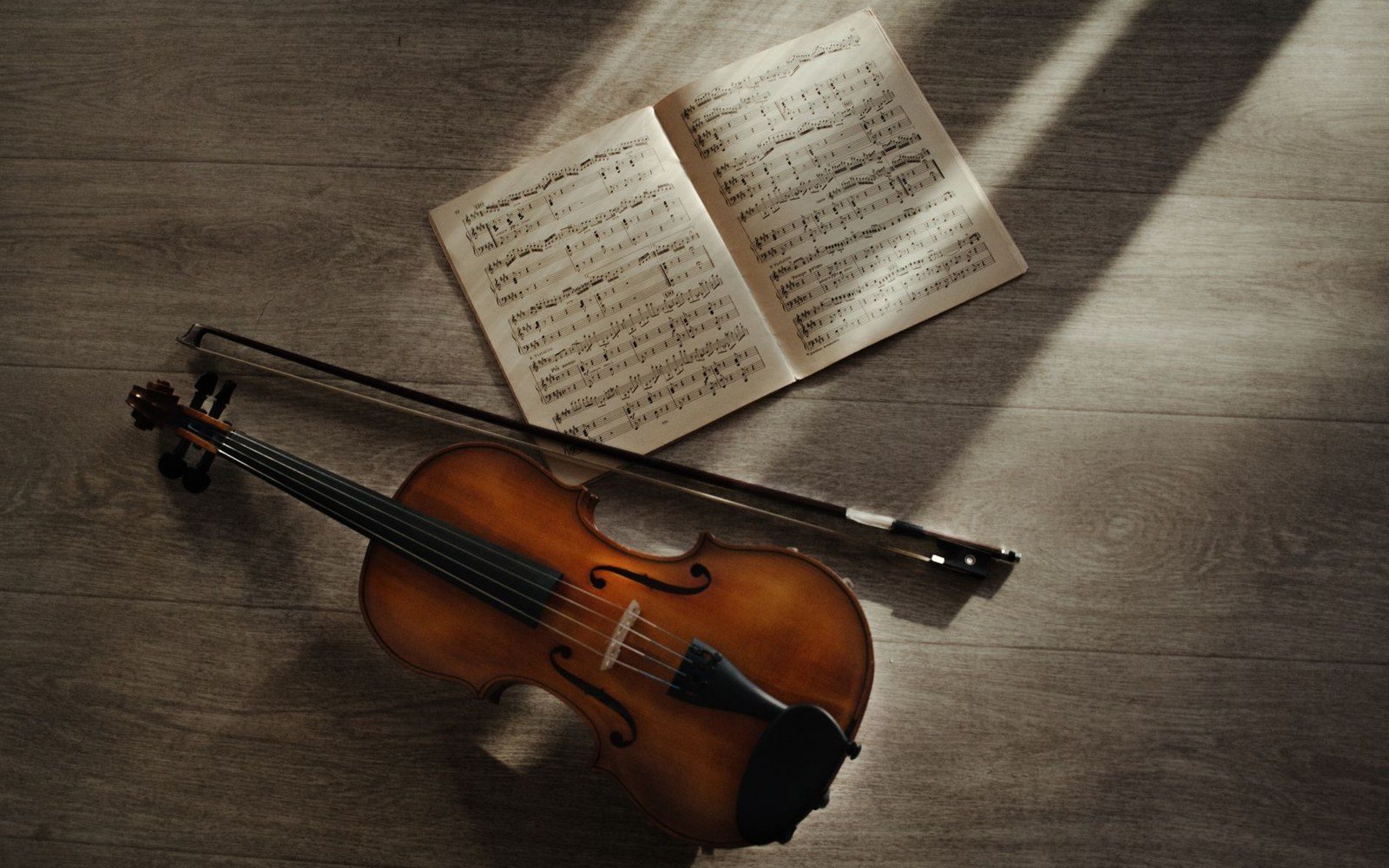
74 to 75 centimetres from button to tip, 58 to 64 grams. The figures came out of one Paris workshop and were never revised.
Photo: Daria Nekipelova / PexelsThe cello bow breaks more decisively from the violin model. Stick length drops to approximately 72–73 centimetres, but weight rises to around 80–84 grams, and the frog is conspicuously broader, spreading a wider ribbon of horsehair to generate the sustained contact pressure that a cello string requires. The head is also typically deeper and more robustly built. Dominique Peccatte produced cello bows that set much of this aesthetic, and the workshop of W. E. Hill & Sons documented the format's specifications in enough surviving examples to establish a clear production standard. The camber — the gentle inward curve of the stick — is subtler in a cello bow than in a violin bow: too much spring and the bow bounces off strings that want sustained, even pressure.
The bass bow presents a genuine fork in the tradition. Two competing designs coexist: the French model, resembling a short, heavy cello bow (stick around 70–71 centimetres, weight 135–145 grams, played with an overhand grip), and the German model, whose dramatically wider frog and different geometry reflect an underhand hold developed in central European orchestral practice. Hermann Richard Pfretzschner was among the Markneukirchen makers who worked extensively in the German format. The IUCN-listed status of Paubrasilia echinata means that every format — from a French bass bow to a conservatoire violin bow — now competes for the same diminishing certified supply, a pressure the CITES Appendix II listing formalises across all worked pernambuco objects.
What the larger bow is not is simply more. Each step up the family demands a recalibration of stiffness, camber, hair width and grip geometry — and the makers who worked at the extremes of the family, bass and violin together, effectively designed in two different idioms from the same wood.
| violin bow | ~60–62 g / ~74–75 cm stick / ~65 cm hair |
| viola bow | ~70–74 g / marginally shorter stick / similar hair length |
| cello bow | ~80–84 g / ~72–73 cm stick / wider frog and hair ribbon |
| French bass bow | ~135–145 g / ~70–71 cm stick / overhand grip |
| German bass bow | wider frog geometry, underhand grip / similar mass range to French |